W3vina.COM Free Wordpress Themes Joomla Templates Best Wordpress Themes Premium Wordpress Themes Top Best Wordpress Themes 2012

Tag Archive | "UIN"

President Yudhoyono’s blind side: Religious violence in Indonesia

THE targets? The many Christian congregations, Shiites and the Ahmadiyah. These groups have become targets of Sunni militant groups who label most non-Muslims as “infidels,” and Muslims who do not adhere to Sunni orthodoxy as “blasphemers.” Even Indonesia’s atheists live in fear of such groups.

Jakarta Globe

Outgoing President Susilo Bambang Yudhoyono broke his long silence on violent religious extremism the other day, describing it in an Aug. 21 interview as “shocking” and “becoming out of control.”

To the dismay of the many Indonesians who have fallen victim to the country’s rising tide of religious intolerance, Yudhoyono’s concerns were not for plight of the country’s besieged religious minorities, but rather a response to the actions of the Islamic State in Iraq and Syria. That group’s well-documented brutality and indications that Indonesians are joining its ranks is certainly cause for worry.

But Yudhoyono’s comments betray a troubling lack of concern about the acts of harassment, intimidation and violence suffered by Indonesia’s own religious minorities from Islamist militants during his decade as president. Instead, Yudhoyono downplayed such incidents in Indonesia by claiming it is “understandable that sometimes there will be conflict between different groups.”

That is more than gross understatement. Indeed, it could summarize the Yudhoyono government’s sorry record in adequately confronting religious intolerance and related violence during his administration. During the last decade, there have been numerous incidents of harassment, threats and violence against religious minorities. Indonesia’s Setara Institute, which monitors religious freedom in Indonesia, documented 220 cases of violent attacks on religious minorities in 2013, an increase from 91 such cases in 2007.

The targets? The many Christian congregations, Shiites and the Ahmadiyah. These groups have become targets of Sunni militant groups who label most non-Muslims as “infidels,” and Muslims who do not adhere to Sunni orthodoxy as “blasphemers.” Even Indonesia’s atheists live in fear of such groups.

The increasing violence against religious minorities — and the government’s failure to take decisive steps against it — does more than put the lie to Yudhoyono’s sunny assessment of Indonesia as a country in which “We respect all religions.” The government’s inaction violates guarantees of religious freedom in the Indonesian constitution and Indonesia’s obligations under the International Covenant on Civil and Political Rights, which Indonesia ratified in 2005.

Indonesia’s Shiite minority has had particular reason to worry in recent weeks. In April, the Anti-Shiite Alliance, a gathering of militant Sunni organizations, attracted thousands to hear speeches advocating “jihad” against the country’s Shiite minority. Among the participants were members of one of the country’s most violent Islamist organizations, the Islamic Defenders Front (FPI). The FPI that day opted for a uniform of black ski masks and camouflage jackets stenciled with the term “Heresy Hunters” to leave no question about their intentions.

But while Yudhoyono frets publicly about the far-away threat of the Islamic State, he and his government have allowed the FPI and kindred groups to carry out violence against religious minorities with near impunity. A June 2008 FPI attack on representatives of the interfaith National Alliance for Freedom of Faith and Religion at the base of the National Monument (Monas) in Jakarta injured dozens. More recently, the FPI forced the closure of an Ahmadiyah mosque in West Java in October 2013 after threatening to burn it down. Rather than confront the FPI, Yudhoyono and his government have chosen to coddle it. On Aug. 22, 2013, Indonesia’s then-religious affairs minister, Suryadharma Ali, opted to make the keynote speech at the FPI’s annual congress in Jakarta at which he praised the group as a “national asset.”

But Yudhoyno’s failure to protect religious freedom goes far beyond his acceptance of the depredations of Islamist thugs. On multiple occasions in recent years, police and government officials have been passively or actively complicit in incidents of harassment, intimidation or violence against religious minorities.

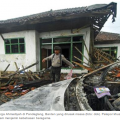
On Feb. 6, 2011, police stood by while a group of some 1,500 Islamist militants attacked 21 members of Cikeusik’s Ahmadiyah community who were holding a prayer meeting in a private home. The militants bludgeoned to death three Ahmadiyah men and seriously injured five others. A court sentenced 12 of the perpetrators to token prison sentences of three to six months. Adding insult to injury, the court also sentenced an Ahmadiyah man to a six-month prison term for merely attempting to defend himself. Police have yet to publicly release the results of their internal investigation into the attack.

Moreover, Indonesian government officials and security forces have often facilitated harassment and intimidation of religious minorities by militant Islamist groups. That includes making explicitly discriminatory statements, refusing to issue building permits for religious minorities’ houses of worship, and pressuring congregations to relocate. Such actions are in part made possible by discriminatory laws and regulations, including a blasphemy law that officially recognizes only six religions, and house of worship decrees that give local majority populations significant leverage over religious minority communities.

Indonesian government institutions have also played a role in the violation of the rights and freedoms of the country’s religious minorities. They include the Ministry of Religious Affairs and the Coordinating Board for Monitoring Mystical Beliefs in Society (Bakor Pakem) under the Attorney General’s Office. Also, the semi-official Indonesian Ulema Council (MUI) has eroded religious freedom by issuing decrees and fatwas (religious rulings) against members of religious minorities and pressing for the prosecution of “blasphemers.”

Yudhoyono will step down as Indonesia’s president in late October, leaving a toxic legacy of rising religious intolerance and related violence.

A key challenge of his successor, Joko Widodo, or Jokowi, will be to take immediate steps to recognize and reverse the malign impact of Yudhoyono’s decade of failure in protecting religious freedom. Prioritizing protection for the country’s religious minorities and a zero-tolerance policy for abuses by Islamist militants will be a vital step toward that goal.

_
Phelim Kine is a former Jakarta-based foreign correspondent and the deputy director of the Asia division at Human Rights Watch.

Posted in Nasional, Persekusi, PerspektifComments (0)

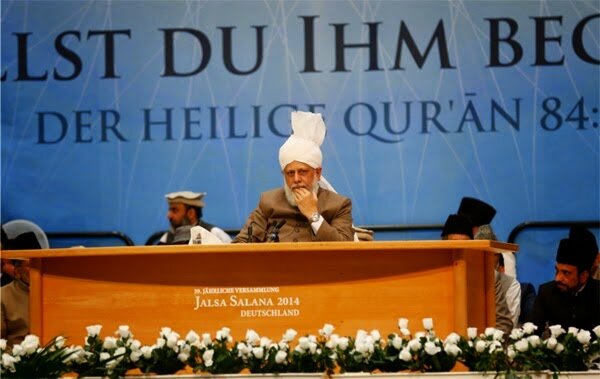
jalsah salanah german 2014 jamaah muslim ahmadiyah

33000 Muslim Ahmadi Menghadiri Pertemuan Tahunan di Jerman

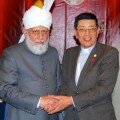
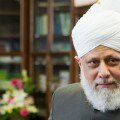
Pemimpin Jamaah Muslim Ahmadiyah Sedunia Khalifatul Masih V, yang Mulia Hazrat Mirza Masroor Ahmad menutup Pertemuan Tahunan ( Jalsah Salanah ) Jamaah Muslim Ahmadiyah ke 39 di Jerman pada 15 Juni 2014 dengan pidato tentang pentingnya membangun ikatan pribadi dan hubungan dengan Tuhan Yang Maha Esa.

Dalam pidatonya, Huzur bersabda bahwa sementara beberapa orang percaya bahwa Tuhan telah “mati”, kenyataannya adalah bahwa sifat-sifat Tuhan terus dimanifestasikan hingga sekarang seperti sebelumnya. Beliau bersabda bahwa Tuhan mendengar sebagaimana Dia selalu mendengar dan berbicara sebagaimana Dia selalu berbicara

Dalam pidatonya, Yang Mulia menguraikan metode dengan mana orang dapat memperoleh cinta kasih Allah. Mengutip secara ekstensif tulisan pendiri Jamaah Muslim Ahmadiyah, Yang Mulia, Hazrat Mirza Ghulam Ahmad dari Qadian, Hazrat Mirza Masroor Ahmad mengatakan bahwa jika seseorang menginginkan hubungan dengan Allah SWT maka ia harus terlebih dahulu berusaha untuk membebaskan diri dari dosa dan harus mengingat Allah dengan cara sebagaimana ingat ayah mereka sendiri.

Yang Mulia menyoroti pentingnya doa sebelum berbicara tentang berbagai tanda-tanda langit yang ditemukan dalam mendukung Hadhrat Masih Mau’ud. Beliau menjelaskan tanda-tanda rohani dan mimpi yang melauinya orang-orang di seluruh dunia di era sekarang yang bergabung dengan Jamaah Muslim Ahmadiyah.

Hazrat Mirza Masroor Ahmad

Hazrat Mirza Masroor Ahmad

Sebagai penutup, Hazrat Mirza Masroor Ahmad mengatakan:

“Saya berdoa agar kita menjadi orang-orang yang memiliki pemahaman yang benar tentang iman mereka; yang dekat dengan Allah dan mendapatkan Cinta-Nya. Semoga kita benar-benar merupakan generasi penerus khazanah luas yang ditinggalkan Hadhrat Masih Mau’ud bagi kita. “

Acara diakhiri dengan doa dalam hati

Sebelumnya lebih dari 33.000 warga Ahmadiyah yang menghadiri acara di Karlsruhe mengambil bagian dalam janji bai’at yang emosional di tangan Khalifah, sementara Muslim Ahmadi di seluruh dunia juga ikut ambil bagian sambil melihat secara langsung di MTA International .

Sumber berbahasa Inggris dapat dibaca di Ahmadiyya Times

Posted in UncategorizedComments (0)

Ahmadiyah harus mencoba untuk inklusif

KOMPASIANA oleh Faris Rusydi

ISU mengenai Ahmadiyah kembali hadir ke dalam ranah publik. Persoalan kekerasan bermotif agama dan kepercayaan berulang kali terjadi di Indonesia. Tidak terkecuali dengan Ahmadiyah yang beberapa saat lalu pernah menjadi kontroversi publik akibat kepercayaannya dalam beragama Islam di bawah petunjuk Mirza Ghulam Ahmad. Read the full story

Posted in UncategorizedComments (0)

For Ahok, a Long Road to Jakarta’s City Hall

Mayling Oei-Gardiner, a demographer and sociologist from the University of Indonesia, notes that Ahok’s chances to become governor can be used to address other issues affecting minorities. She specifically references the plight of religious minorities, noting the continuing persecution of members of the Ahmadiyah sect, which has drawn international condemnation of the government’s inaction.

The Jakarta Globe

_
Jakarta. With Joko Widodo’s decision to run for presidency comes Deputy Governor Basuki Tjahaja Purnama’s turn to bear the gubernatorial mantle of Jakarta.

Popularly known as Ahok, his ascension to the post of interim governor marks only the second induction of an ethnic Chinese and non-Muslim Indonesian into the capital’s top seat, 50 years after the first governor of Chinese descent, Henk Ngantung, controversially stepped into office.

The popular consensus seems to be that Joko and his running mate, Jusuf Kalla, won the first presidential debate, according to an online poll by the Jakarta Globe that showed almost 90 percent of respondents tipping their hats to the pair.

According to social media monitors at PoliticaWave, the hashtag #PresidentNomor2 — referring to the ticket’s number on the July 9 ballot — became a worldwide trending topic on Twitter, showing strong support for the team from the Indonesian Democratic Party of Struggle (PDI-P).

Now that Joko has taken the lead, the possibility of Ahok cementing his position as governor is becoming increasingly real. Whether he is up to the monumental task is the question many are asking.

Reform politics

With a population of 9.8 million, Jakarta ranks as one of the top 20 biggest cities in the world, but its problems, many complain, are larger than life.

According to a study published by the University of Indonesia (UI), the financial strain of Jakarta’s infamous gridlock may total up to Rp 12.8 trillion ($1.1 billion) a year in productivity, fuel consumption and health costs.

Furthermore, flooding managed to displace 130,000 people and claim the lives of at least a dozen this year alone.

“Whoever leads Jakarta has to be capable in solving its problems. Because Jakarta is our center of government,” says Siswanto, a driver for one of the many upper-middle-class families residing in the capital’s mansions, often in stark contrast with the desolate slums next door.

The city’s long list of woes have had the public calling for a more efficient administration. Joko — popularly known as Jokowi — and Ahok seemed to promise just that during their campaign in 2012. Running against then-incumbent Fauzi Bowo, they charmed citizens with their refreshing take on politics.

“I see Ahok and Jokowi as the first politicians who were willing to face problems directly and try to implement measures to solve them, and [who were] transparent to the public. I think that is the right thing for politicians to do,” says Yulianto Sumarli, a former member of the House of Representatives.

Given that Jokowi has taken his leave of absence to campaign, it is now up to Ahok to deal with the challenges of managing the city. And for his part, Ahok seems to be more than ready for the demanding task.

“The first thing we have to fix here is the bureaucracy … by testing and evaluating [bureaucrats’] performance,” Ahok recently said. “If they won’t follow the rules, we can tell them to get out. Sometimes we have to kick them out. Of course they’ll get angry, but we don’t care.”

‘It’s all good, boss!’

The interim governor is known for his brazen attitude in dealing with the city’s clunking bureaucratic machinery, which many view as inept and inefficient in dealing with the city’s challenges. While this has earned him much admiration, some note that this style of governance may need to change.

“He’s very frank, with a strong sense of leadership,” says Siti Zuhro, a political analyst with the Indonesian Institute of Sciences (LIPI).

“[He’s] very clear in giving instructions, in talking about problems facing Jakarta; no hiding. That’s OK for urban society, who have no problems with him. [But] to reform bureaucracy, Ahok needs to adopt a more efficient method in persuading the administration to embrace his program. Stop yelling, stop being angry; be nice and diplomatic.”

Siti also cautions that a healthy relationship between the central government and the city administration is key, as the system remains very hierarchical. Conflict, she concludes, is not necessary.

Thung Yu Lan, also of LIPI, points out that Jokowi functioned as a defender of his deputy governor. Now that he is on the campaign trail, it is crucial for Ahok to amass popular support that will guard against jealous bureaucrats intending to undermine him at every step. Without it, she continues, he may not be able to snag a second term in office.

The remarks come in light of his latest row with Sports Minister Roy Suryo. The minister, who is known for stirring up controversy in his own right, has threatened to take Ahok to the police over his claims that the Sports Ministry was hindering the completion of Jakarta’s long-awaited monorail project.

In a statement issued on Tuesday, Suryo vowed to report the case to the police should the city administration refuse to retract its claims.

The social minefield of politics aside, the administrative burden of running this city single-handedly seems to have taken a toll on the action-oriented man.

The interim governor jokingly claimed his hand was cramping up from signing too many documents, but on a more serious note, he also admitted that without Jokowi to share the workload, every task fell on his team’s shoulders.

Nevertheless, despite the increased workload, he continues to maintain a positive front, claiming to feel no pressure from the administration.

“[Jokowi] often calls. He asks, ‘Is everything OK?’ And I always answer, ‘It’s all good, boss!’”

Minority politics

One of the greatest attractions of the Jokowi-Ahok ticket was their revolutionary approach to managing the city, along with the fact that Ahok is ethnically Chinese and Christian — a rare combination to rise to the forefront of local politics.

Many still remember the chaos that descended upon the city in May 1998, when people of Chinese descent were being targeted. Yet there are signs that the citizens of Jakarta are willing to look past the socio-ethnic divides that once tore them apart.

“I see him and Jokowi as the first clean, responsible, transparent [team], instead of [having] the first ethnically Chinese deputy governor,” Yulianto says.

When asked about his own experience as a minority politician, Yulianto says he has never given the matter much consideration, as he doesn’t consider himself to be a minority.

“We all have to live with it, we are all Indonesians,” he says.

Yet Ahok’s rise to interim governor may serve as a significant symbol for those from ethnic minorities to enter the world of Indonesian politics.

“His identifier isn’t his race or religion, but how he does his work, and I think that’s the one thing that encourages me the most,” says Glenys, a Chinese-Indonesian university student interested in politics. The fact that Ahok exemplifies how minorities are able to exercise their political agency in a more influential capacity is also very heartening, she says.

In the face of rising intolerance

However, not everyone is thrilled by the recent developments in Jakarta’s administration. The acting governor’s blunt attitude and minority status have caused no small ire with the Islamic Defenders Front (FPI), a hard-line fundamentalist group active known for its attacks on minorities.

Now that Ahok is a step closer to permanently clinching the top seat at City Hall, the FPI has made public its intent to support Jokowi’s rival, Prabowo Subianto. The group made its stance quite clear on its official website, in which Muslim voters were urged not to choose “the presidential candidate [whose victory] could lead to [Ahok’s] appointment as governor.”

Mayling Oei-Gardiner, a demographer and sociologist from the University of Indonesia, notes that Ahok’s chances to become governor can be used to address other issues affecting minorities. She specifically references the plight of religious minorities, noting the continuing persecution of members of the Ahmadiyah sect, which has drawn international condemnation of the government’s inaction.

While Indonesia has long been touted as a model Muslim-majority democracy, the truth remains that many fear its trademark pluralism is failing. Data collected by the Setara Institute for Peace and Democracy show incidences of religious intolerance increasing annually — 200 in 2009, 216 in 2010, 244 in 2011, and 264 in 2012.

Atheist Alexander Aan spent two years in prison for denouncing the existence of God on Facebook. In 2011, a mob of 1,500 attacked a community of Ahmadiyah Muslims in Banten, killing at least three and leaving five seriously injured. However, only 12 were arrested, and sentenced to three to five months in prison.

In the words of one Ahmadi: “Please let the outside world know that we are no longer safe in our own homes.”

In the face of growing intolerance, Ahok’s rising star may provide that safety as well as a sense of hope to many.

“[Ahok] is brave. Brave enough to die,” Mayling says, adding that she wakes up every day fearing news of his assassination.

Despite his many admirers, occupying such a game-changing position is not without its pressures.

“If he’s successful, we can rely on him to create a good image. But if he fails, there’s also a problem,” Thung says.

Road work

So what would Ahok have to do to transform Jakarta into an efficient metropolis? Most observers seem to be urging him to continue Jokowi’s programs.

“In terms of reigning over Jakarta, one of the city’s problems, as well as the country’s, is poverty. How is he going to deal with poverty? I think he has take a positive step in moving people to public housing,” Mayling says.

On the overcrowded state of Jakarta, the demographer suggest the administration can work with neighboring provinces to help slow down the annual tide of people rushing into the capital after Idul Fitri in search of jobs and a better life. While Mayling concedes a complete block on migration is highly unlikely, improvement in the quality of life outside the capital might help reduce its seemingly magnetic pull. Job creation, health and education are also on the list of issues to be considered, especially since they constitute venues of social mobility.

Many have expressed their disappointment they may not be able to see Jokowi and Ahok make good on their campaign promises. Whether Ahok will continue down the path the team has laid out remains to be seen.

Mulyono, a security guard, believes the solutions to many of Jakarta’s problems lie in continuing the programs already set in place by Jokowi. However, given the differences between the two leaders, he doubts this will be the case.

Whatever route he chooses to take, it remains clear that Ahok will continue to cut a controversial figure in politics for the foreseeable future.

“As long as you’re Indonesian, it doesn’t matter what your ethnicity is. It’s being an Indonesian that makes or breaks. It’s being Indonesian that shows what people are willing to do for the nation,” Mayling says.
_
Correction: This version reflects to say that Basuki Tjahaja Purnama is ethnically Chinese.

Posted in Kemanusiaan, Nasional, PerspektifComments (0)

Belief in One God

NEW MANDALA — EARLIER this month, municipal government officials once again sealed the entrance to an Ahmadiyah mosque in Bekasi, on the outskirts of Jakarta.

The mosque had previously been closed in February 2013, and had been at the center of the debate about the role of Ahmadiyah worshippers in Indonesia. Read the full story

Posted in NasionalComments (0)

Konferensi Nasional Kebebasan Beragama/Berkeyakinan minta ‘aturan mendirikan rumah ibadah’ direvisi

MENCUATNYA sejumlah aksi kekerasan berbau agama membuat sejumlah organisasi non-pemerintah, organisasi keagamaan/kepercayaan, pemerintah pusat/daerah, perguruan tinggi, media, lembaga negara independen dan individu menggelar Konferensi Nasional Hak Kebebasan Beragama/Berkeyakinan “Indonesia Tanpa Kebencian”. Read the full story

Posted in NasionalComments (0)

Jalaluddin Rahmat: “Saya Menang di Kandang Macan”

KASUS kekerasan terhadap Syiah, Ahmadiyah, penutupan dan pelarangan pembangunan tempat ibadah tidak boleh terjadi lagi ke depan. Negara tidak boleh kalah oleh segelintir orang. “Kasus GKI Yasmin di Bogor itu melecehkan negara. Bagimana mungkin putusan MA kalah oleh lurah dan camat. Negara terlalu lemah,” serunya. Read the full story

Posted in UncategorizedComments (1)

245 kasus intoleransi di Indonesia dalam setahun

TEMPO.CO, Jakarta – Laporan The Wahid Institute menyebutkan praktek intoleransi sepanjang 2013 yang dialami kelompok agama minoritas, seperti Ahmadiyah, komunitas Kristen, dan mereka yang dituduh sesat, ada 245 kasus.

Yenny Wahid, Director The Wahid Institute, mengatakan banyak masyarakat Indonesia berkonflik karena masalah agama. Read the full story

Posted in UncategorizedComments (0)

Mencari Jejak Islam di Kepulauan Solomon

“KELOMPOK Muslim di sana, termasuk kelompok Ahmadiyah dan kelompok lain. Komunitas Muslim Ahmadiyah di kepulauan ini terdaftar sebagai organisasi pada April 2003.”

DALAM beberapa tahun, Melanesia telah menyaksikan fenomena yang diabaikan masyarakat internasional, yaitu difusi Islam. Difusi Islam di pulau-pulau Pasifik telah memperoleh hasil yang sangat sukses. Read the full story

Posted in UncategorizedComments (0)

Semesta Tasikmalaya Adakan Workshop Pendidikan Toleransi Beragama

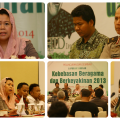
Pagi itu tanggal 20/1/2013 Baliho Besar nampak terlihat di ruangan pertemuan Gedung Asia Plaza. Acara ini di selenggarakan oleh SEMESTA (Serikat Masyarakat untuk Toleransi Beragama). Pukul 9 WIB pagi nampak antrian tamu undangan mengisi daftar hadir guna mengikuti acara workshop ini. Beberapa tamu tak lupa membawa serta undangan sebagai tanda bahwa yang bersangkutan di undang untuk acara workshop ini.

Pukul 09.30 WIB acara yang dipimpin oleh seorang moderator sekaligus ketua YAYASAN SEMESTA, Kang Faoz Noor membuka acara dengan bebrapa prakata sebagai pengantar. Acara ini resmi dibuka oleh Kepala FKUB : Dadang Romansyah serta pembacaan doa oleh sesepuh pesantren Paozan Tasikmalaya.

Dalam sambutanya ketua FKUB mennyatakan kebanggaanya atas adanya acara semacam ini, yang dapat memberikan pendidikan TOLERANSI BERAGAMA. Beliau mengungkapkan banyak agama di indonesia terdapat 6 agama yang diakui dan diatur oleh negara sebagaimana dianut dalam sila pertama Ketuhanan Yang Maha Esa.

Banyak agama di indonesia mengindikatorkan bahwa negara Indonesia sebagai negara majemuk atau multi kultur dan beragam keyakinan. Kemajemukan negara Indonesia adalah potensi yang akan mengangkat negara Indonesia menjadi negara yang besar kuat dan bermartabat. Tetapi kemajemukan serta heterogenitas bangsa ini jika tidak dikelola dengan baik maka bukanlah hal yang tak mungkin akan melahirkan malapetaka dan bencana.

Tidak sedikit dalam Dispora negara, sejarah kita telah menyaksikan berapa banyaknya korban kerusuhan dengan latar belakang isu agama. Munculnya kerusuhan akibat isu agam itu kerena adanya yang merasa bahwa kelompoknya itu yang paling benar. Padahal keberagaman itu merupakan sunatullah tuturnya.

Pembicara pertama yaitu Dr. Adeng Muchtar Ghazali, M.Ag, beliau adalah Dosen UIN Bandung. Makalah yang disampaikan berjudul Membangun Kerukunan Lewat Madrasah. Menurutnya kerukukunan sangat berkaitan erat dengan toleransi, kerukunan menunjukan pada wujud nyata dari dua pihak (orang/ kelompok) yang berdampingan secara nyaman dan harmonis sedangkan TOLERANSI berkaitan dengan nilai dan prilaku atau sikap yang ditunjukan oleh seseorang atau sekelompok orang untuk hidup rukun. Sementara madrasah berhubungan dengan pendidikan Islam sebagai bagian dari tempat berlangsungnya kegiatan proses belajar mengajar. Beliau merumuskan dalam workshop ini menjadi sebuah pokok bahasan bahwa nilai-nilai toleransi dan kerukunan dalam prespektif Islam yang dibangun melalui proses pendidikan di madrasah.

PENGERTIAN TOLERANSI DAN KERUKUNAN Istilah toleransi berhubungan dengan nilai dan perilaku. Kurang lebih istilah ini menunjukan pada arti “saling memahami”, ”saling mengerti” dan “saling membuka diri dalam bingkai persaudaraan”. Sementara istilah “kerukunan” diartikan sebagai “ hidup bersama dalam masyarakat dalam “kesatuan hati” dan “bersepakat untuk tidak menciptakan perselisihaan dan pertengkaran”. Jika pemaknaan ini dijadikan pegangan maka Toleransi dan kerukunan adalah suatu yang ideal dan di dambakan oleh masyarakat manusia.

TASAMUH dalam terminologi islam sebagai istilah yang dekat dengan toleransi. Sekalipun tidak secara utuh menunjukan pengertian yang sama, tetapi secara esensial mengandung tujuan yang diinginkan yaitu saling memahami, saling menghormati, dan saling menghargai sebagai sesama manusia.

Pembicara sesi ke dua adalah Risdo dari Kristen Ortodok. Beliau memaparkan keberagaman serta toleransi dalam prespektif Kristen Ortodok sementara pembicara terakhir diisi oleh budayawan dari Ci Pasung yaitu : Kang Acep Zam Zam Noor. Dengan materi keberagaman, toleransi agama dalam prespektif budaya. Pemateri dalam setiap sesi selalu memberi kesempatan audiens untuk tanya jawab nampak peserta antusias dengan sesi-sesi diskusi ini.

Waktu terus berlalu tak terasa Pukul 16 WIB dengan cuaca yang cerah, acara ini ditutup dengan ramah tamah dan dibagikan Sertifikat sebagai tanda penghargaan panitia penyelenggara terhadap peserta yang mengikuti workshop ini.

Begitu berharganya workshop ini kendati tak begitu lama namun ini akan membawa kesan tersendiri bagi peserta. Semoga workshop ini dapat membawa dampak positif bagi perkembangan Kota Tasikmalaya sehingga Kota Tasikmalaya layak disebut Kota Religius dan Islami yang penuh Toleransi. Salam.(Munawarman)

Posted in NasionalComments (0)

Page 2 of 3123

@WartaAhmadiyah

Tweets by @WartaAhmadiyah

http://www.youtube.com/user/AhmadiyahID

Kanal Youtube


Tautan Lain


alislam


alislam


alislam


alislam

Jadwal Sholat

shared on wplocker.com