W3vina.COM Free Wordpress Themes Joomla Templates Best Wordpress Themes Premium Wordpress Themes Top Best Wordpress Themes 2012

Tag Archive | "Ciamis"

‘Time of Tolerance’ may be coming to end in Indonesia

Jakarta Globe

Politics of Peace: Focus on national elections has been touted as the cause behind decreased religious violence in 2014

By Kennial Caroline Laia on 12:14 am Dec 29, 2014

Jakarta. The absence of major cases of violence stemming from religious intolerance in Indonesia this year by no means indicates that the issue has been resolved. Observers noted that political euphoria during Indonesia’s election year has diverted many sentiments of intolerance to the political arena, while poor law enforcement is still considered a main culprit behind lingering, if not growing intolerance.

Islamic scholar Azyumardi Azra said the condition of religious tolerance in Indonesia this year was better than last year in that there were no major cases as had been recorded in previous years.

“Overall, this year is much better than last year. Public tolerance has improved. There’s no big case we should be alarmed of,” Azyumardi told the Jakarta Globe last week.

The history professor from Syarif Hidayatullah State Islamic University, however, scrutinized the intense use of religious sentiment during the elections, for both the legislative elections on April 9 and the presidential race on July 9.

“One thing that must be highlighted this year is the utilization of religion as political means during presidential campaigns,” he said, referring especially to rampant smear campaign against candidate Joko Widodo, who has become Indonesia’s seventh president.

Joko, a Javanese-born Muslim, was called a Chinese Christian, a missionary, a Zionist underling and a communist agent, among other things, in smear messages circulating freely via text messages, chat services and social media platforms among Indonesian voters.

Azyumardi said it was luck that although many voters might have been swayed by the smears, none were inspired to commit violence.

“Fortunately, [the use] of religious sentiments appear to have had no significant effect on voters in that they didn’t ignite violence,” he said.

Muhammad Nurkhoiron, a commissioner with the National Commission on Human Rights, better known as Komnas HAM, said the election festivities rendered religious intolerance issues abandoned this year, resulting in no significant progress being made to address the problem.

“In 2014, no specific policy has been made to ensure better minority protection because of focus on the electoral process between April and July,” Nurkhoiron said last week.

He called efforts to improve religious tolerance in Indonesia a “stagnant” process.

“There are still rallies on minorities’ places of worship, hate speeches in social media and even public demonstrations against a Chinese Christian government official.”

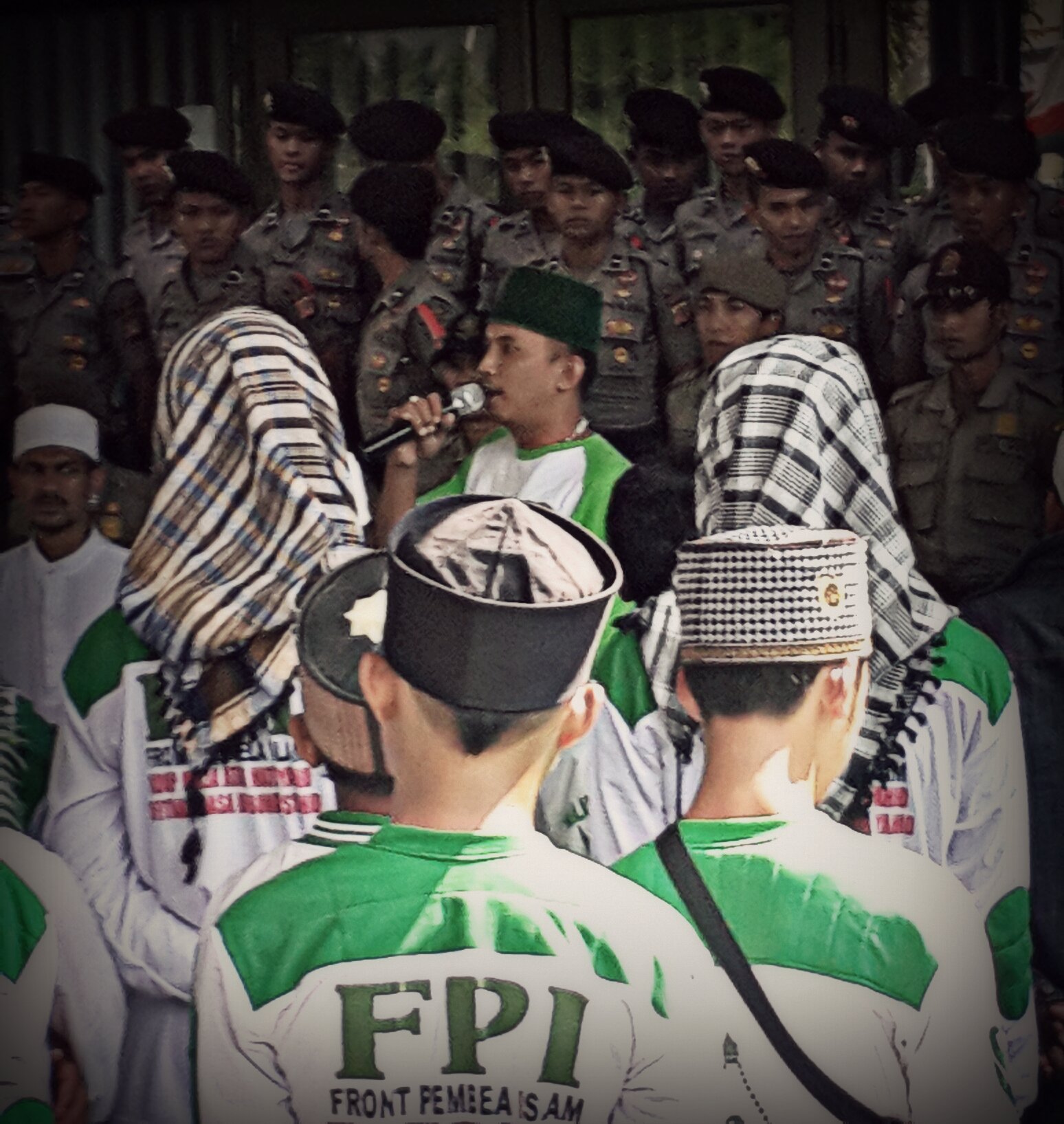
He was referring to Jakarta Governor Basuki Tjahaja Purnama, formerly deputy governor to Joko, whose ascent to the top job in the capital was marked with rallies by hard-line groups such as the Islamic Defenders Front (FPI) who objected to predominantly Muslim Jakarta being ruled by a Christian governor.

Among cases of religious intolerance that made media headlines in Indonesia this year are an FPI attack against members of the minority Islamic sect Ahmadiyah in Ciamis, West Java in June; the ban on hijab in a number of schools in predominantly Hindu Bali; and the attack on a house hosting a Catholic mass in Yogyakarta in May.

Nurkhoiron said radical mobs especially had been encouraged to keep launching attacks against the minority due to poor law enforcement. Even in the absence of a law specifically guaranteeing the right to religious freedom for minorities, any cases of violence and assaults should be considered crimes, in line with the Criminal Code.

“The police must protect the people, both from the minority and the majority. Sadly, the police often take side with the majority,“ he said.

Nurkhoiron added the intolerance and violence cases were often encouraged or aggravated by some regulations, as well as fatwas issued by local ulema, such as edits of the Indonesian Council of Ulema, or MUI.

Hard-line groups such as the FPI have based their violent protests against the Ahmadist on an edict issued by the MUI in 2005 that read: “Ahmadiyah isn’t part of Islam. It is deviant and misleading. Therefore, people who adhere to the religion are infidels.”

“An edict isn’t a law product but is a social product created by and applied for certain communities. Should the edict violate the existing and official laws, it is the task of law enforcers to warn people [against the edict],” he said.

The Jakarta Globe attempted to contact MUI chairman Din Syamsuddin for comment, but he didn’t return the Jakarta Globe’s calls and text messages.

An outdated, but still often used decree issued by Indonesia’s first president Sukarno in 1965 is another example of discriminatory regulations against Muslims who have different interpretations on Islam from the mainstream Muslim communities, Nukhorison added.

Despite the little progress, he said 2014 offered a ray of hope.

“The religious minister this year has given a green light to support minority groups. We are waiting for [the realization],” Nurkhoiron says.

Religious Affairs Minister Lukman Hakim Saifuddin last week said the ministry was drafting a bill on religious tolerance that would guarantee one’s right to freedom of religion, including protection of minority religious groups.

Earlier in July, Lukman won praise from rights activists and minority groups as he said he recognized Baha’i as a faith, although he later clarified that it was his personal opinion, not a policy of the government.

Indonesia recognizes six official religions: Islam, Protestantism, Catholicism, Buddhism, Hinduism and Confucianism.

Haris Azhar, coordinator of the Commission for Missing Persons and Victims of Violence (Kontras), emphasized the need for real actions in the form of law enforcement against those who commit violence on behalf of religion.

“So far, there haven’t been real actions made by the government to address intolerance cases in many areas in Indonesia. Although there has been statement from the minister, I’m afraid it could be no more than a saccharine promise,” Haris said.

“The government often forgets that intolerance cannot be addressed by mere stack of papers consisting of regulations. No matter how many laws you propose, without firm actions by from law enforcers, there will still be groups that commit violence on behalf of religion.”

He further added that the drafted bill would be useless if the government did nothing to revoke bylaws that were against the spirit of the bill.

Bylaws in several regions in Indonesia have been subject to rights activists’ criticism because they are considered discriminatory, most notably in Aceh, the only province in Indonesia allowed to adopt the sharia bylaw following its history of secessionist rebellion.

Azyumardi added it was also imperative for the government to take proactive measures to prevent religious-based violence by bridging the gap between interfaith communities in Indonesia.

“We must consolidate our democracy locally. If not, people will get more fragmented and more violence are likely to happen,” Azyumardi says.

Meanwhile, members of GKI Yasmin congregation in Bogor remained unable to hold a Christmas service inside their church on Thursday. This is the fifth year that they have been unable to hold Christmas service in the church since it was sealed by local authorities in 2010.

GKI Yasmin obtained a permit to open a church in Bogor in 2006, but the permit was later revoked by the municipal government following pressure from local hard-line Islamic groups.

A Supreme Court ruling later overruled the local authority decision, compelling the Bogor administration to reopen the church, but even the new Bogor mayor, Bima Arya Sugiarto, who was elected last year, has refused to comply.

Posted in Nasional, Persekusi, PerspektifComments (0)

Ahmadiyah Kota Banjar menggunakan kembali aset masjid dan rumahnya

PENGURUS Jemaat Ahmadiyah Indonesia (JAI) di cabang Kota Banjar, Jawa Barat, pada hari Senin tanggal 17 November 2014 mengeluarkan surat pemberitahuan kepada walikota Banjar tentang penggunaan Masjid Al-Istiqamah dan rumah tinggal milik JAI di Kota Banjar.

Surat yang bernomorkan “03/JAIBJR/17/11/2014″ ditandatangani Ahmad Yunus selaku Ketua dan Maulana Mukhlis Ahmad yang merupakan muballigh setempat di cabang Kota Banjar tersebut.

Isi surat yang berlampirkan tiga eksemplar berkas itu adalah sebagai berikut:

“Kepada Yth.
Walikota Banjar
di Banjar

“Perihal: Pemberitahuan Penggunaan Masjid Al-Istiqamah dan Rumah Tinggal Milik Jemaat Ahmadiyah Kota Banjar

“Lampiran: Tiga Exemplar/Berkas

“Assalamu ‘alaikum warahmatullaahi wabarakatuhu!

“Salam silaturrahim kami sampaikan. Semoga Allah swt, melimpahkan hidayah dan ridla-Nya kepada Ibu Walikota dalam menjalankan tugas Bangsa dan Negara. Amien!

“Pemerintah Kota Banjar, melalui Surat Kepusan Nomor 450/Kpts.115-Huk/2011, telah menyatakan: membekukan Jemaat Ahmadiyah Indonesia Kota Banjar, melarang anggota Jemaat Ahmadiyah Indonesia Kota Banjar beraktifitas di Masjid al-Istiqamah, dan menetapkan: Masjid al-Istiqamah di Jalan Raya Pangandaran Dusun Tanjungsukur Kelurahan Hegarsari Kecamatan Pataruman Kota Banjar status quo. Surat di tetapkan di Banjar pada tanggal 21 September 2011, ditandatangani, Herman Sutrisno, Walikota Banjar. (Copy Surat Keputusan Walikota Banjar terlampir – lampiran I).

“Menyusul Surat Kepusan tersebut, Tim Penanganan Jemaat Ahmadiyah Kota Banjar melalui surat Nomor 08/TP-JAI/IX/2011, tanggal 26 September 2011, menyampaikan pemberitahuan bahwa aktifitas Ahmadiyah Kota Banjar telah dibekukan, dan oleh karena itu seluruh bangunan yang dijadikan sekretariat Ahmadiyah harus dikosongkan/tidak ditempati karena akan dilakukan penyegelan oleh aparat keamanan pada hari Kamis, tanggal 29 September 2011, waktu pukul: 09.00.

“Surat ditandatangani oleh Ketua Tim Penanganan Jemaat Ahmadiyah Kota Banjar, Drs. H. Undang Munawar M.Pd, Kepala Kantor Kementerian Agama Kota Banjar. (Copy surat tim penanganan JAI Kota Banjar terlampir – lampiran II)

“Kamis, tanggal 29 September 2011, pukul: 09.00, sesuai dengan surat pemberitahuan sebelumnya, Masjid al-Istiqamah dan Rumah Tinggal Imam Majsid/Mubaligh di tutup aparat keamanan, bahkan pintu masuk ke bagian belakang di las. Tragis dan ironis, di negara yang berketuhanan Yang Maha Esa, Tuhan dibelenggu, dan Maulana Mustaqim, (Imam Masjid/Mubaligh), WNI asli, terpaksa harus keluar rumah, cari kontrakan. Subhanallah. Inna lilaahi wa inna ilaihi raaji’uun.

“Mengingat dan menimbang:

“1. Pasal 28 E UUD 1945: (1) Setiap orang bebas memeluk agama dan beribadat menurut agamanya, memilih pendidikan dan pengajaran, memilih pekerjaan, memilih kewarganegaraan, memilih tempat tinggal di wilayah negara dan meninggalkannya, serta berhak kembali. (2) Setiap orang berhak atas kebebasan meyakini kepercayaan, menyatakan pikiran dan sikap, sesuai dengan hati nuraninya. (3) Setiap orang berhak atas kebebasan berserikat, berkumpul, dan mengeluarkan pendapat.

“2. Pasal 29 UUD 1945: (1) Negara berdasar atas Ketuhanan Yang Maha Esa (2) Negara menjamin kemerdekaan tiap-tiap penduduk untuk memeluk agamanya masing-masing dan untuk beribadat menurut agamanya dan kepercayaannya itu.

“3. SKB Menteri Agama, Jaksa Agung, dan Menteri Dalam Negeri Republik Indonesia, Nomor : 3 Tahun 2008, Nomor : KEP-033/A/JA/6/2008, Nomor : 199 Tahun 2008, tidak melarang Jemaat Ahmadiyah secara organisasi, juga tidak melarang warga Jemaat Ahmadiyah beribadah di Masjid dan menempati rumah tinggalnya.

“4. Presiden RI, Susilo Bambang Yudhoyono (SBY), pun mengakui: Negara tidak Melarang Ahmadiyah, tapi negara mengatur”.

“5. Pergub Jabar Nomor 12 Tahun 2011 juga tidak melarang Jemaat Ahmadiyah secara organisasi, juga tidak melarang warga Jemaat Ahmadiyah beribadah di Masjid dan menempati rumah tinggalnya.

“6. Jemaat Ahmadiyah Indonesia adalah organisasi legal formal berbadan hukum, dengan SK Menteri Kehakiman RI No. JA.5/23/13 Tgl.13-3-1953. Artinya, Jemaat Ahmadiyah Indonesia adalah organisasi yang mempunyai hak untuk hidup diseluruh wilayah Negara Kesatuan Republik Indonesia (NKRI).

“7. Warga Jemaat Ahmadiyah Indonesia adalah warga Negara Republik Indonesia. WNI asli putra kandung ibu pertiwi Indonesia.

“Maka, dengan ini kami beritahukan, Jemaat Ahmadiyah Indonesia Kota Banjar akan menggunakan kembali aset milik Jemaat Ahmadiyah Kota Banjar berupa rumah dan Masjid al-Istiqamah yang terletak di Jalan Raya Pangandaran Dusun Tanjungsukur Kelurahan Hegarsari Kecamatan Pataruman Kota Banjar, sebagaimana dijamin oleh konstitusi.

“Kami yakin, dengan semangat Pancasila, UUD 1945, Bhineka Tunggal Ika, NKRI, dan semangat kerja, kerja, dan kerja dari Presiden RI ke-7, Ir. Joko Widodo, dan Wakil Presiden Jusuf Kalla, dengan semangat Indonesia hebat, dan dengan semangat perubahan menuju Indonesia yang lebih baik, Pemerintah Kota Banjar tidak akan keberatan jika kami menggunakan kembali aset milik kami Jemaat Ahmadiyah Kota Banjar.

“Sebagai bahan pertimbangan, terlampir kami sampaikan sebuah makalah, berjudul: Indonesia Negara Pancasila Rumah Yang Aman Bagi Semua Pemeluka Agama dan Aliran Agama (Islam, Kristen, Katholik, Hindu, Budha, Konghucu – NU, Muhammadiyah, Ahmadiyah, Syi’ah, dll). (lampiran III).

“Demikian pemberitahuan ini kami sampaikan, mohon menjadi maklum dan mengetahui adanya. Terimakasih.

“Banjar, 17 Nopember 2014/24 Shafar 1436 H

“Wassalam, dan hormat:
“Ttd Ahmad Yunus, Ketua
“Ttd Mln. Mukhlis Ahmad, Mubaligh

“[1] Februari 2012, dan Kliping Warta Jateng, edisi Kamis, 16 Februari 2012, dalam makalah: Indonesia Negara Pancasila Rumah Yang Aman Bagi Semua … Lihat, Kliping inilah.com, edisi Rabu, 15

“Tembusan disampaikan kepada:
1. Yth. Presiden Republik Indonesia (sebagai laporan)
2. Yth. Menteri Dalam Negeri RI (sebagai laporan)
3. Yth. Menteri Agama RI (sebagai laporan)
4. Yth. Jaksa Agung RI (sebagai laporan)
5. Yth. Kapolri
6. Yth. Panglima TNI
7. Yth. Ketua KOMNAS HAM RI (sebagai laporan)
8. Yth. Ketua Ombudsman RI (sebagai laporan)
9. Yth. Gubernur Jawa Barat
10. Yth. Kapolda Jawa Barat
11. Yth. Pangdam III/Siliwangi
12. Yth. Kepala Kejaksaan Tinggi Jabar
13. Yth. Kepala Kantor Kementerian Agama Jabar
14. Yth. Kapolresta Banjar
15. Yth. Dandim 0613/Ciamis
16. Yth. Danyon 323/Kota Banjar
17. Yth. Kajari Kota Banjar
18. Yth. Kepala Kantor Kementerian Agama Kota Banjar
19. Yth. Kepala Satpol PP Kota Banjar
20. Yth. Ketua MUI Kota Banjar
21. Yth. Camat Pataruman
22. Yth. Kapolsek Pataruman
23. Yth. Danramil Pataruman
24. Yth. Kepala KUA Pataruman
25. Yth. Lurah Hegarsari, Kec. Pataruman
26. Yth. Ketua RW/RT Tanjungsukur
27. Yth. Amir Nasional Jemaat Ahmadiyah Indonesia
28. Yth. Amir Wilayah Jawa Barat Jemaat Ahmadiyah Indonesia
29. Yth. Amir Daerah Priangan Timur Jemaat Ahmadiyah Indonesia
30. Arsip”

Press Rilis JAI Wilayah Priangan Timur | DMX | WA

Posted in Nasional, Siaran PersComments (0)

Voting against Indonesia’s religious intolerance

INDONESIAN Christians aren’t the only targets of discrimination by local government officials. On June 26, regency officials in Ciamis, West Java, sealed an Ahmadiyah mosque on the basis that Ahmadis are “heretics” and “blasphemous”. Syaiful Uyun, an Ahmadiyah imam, told Human Rights Watch that local governments in West Java have ordered the closure of at least 37 other Ahmadiyah mosques over the past six years.

PICTURE caption: “An Ahmadiyah mosque in Ciamis in West Java. The mosque management took down their name board after a West Java govertment bans Ahmadiyah activities in 2011. Ciamis is located in southeastern West Java. Totally there are 37 Ahmadiyah mosques in trouble in the area because of violence and government discrimination.” –Andreas Harsono; Facebook.com

_
Human Right Watch

Author: Andreas Harsono
Published in: MalaysiaKini

PROTESTANT church congregations in Singkil regency in Indonesia’s Aceh province in northern Sumatra are in the market for new video hardware.

But they did not source wide-screen televisions to view 2014 World Cup matches or the candidate debates for Indonesia’s July 9 presidential election.

Instead, the 10 churches wanted closed circuit television cameras (CCTV) to defend against possible arson attacks by violent Islamist militants.

Those church congregations have reason to be afraid during this election season. Pastor Erde Berutu, the minister of one of the Singkil congregations seeking CCTV cameras, told Human Rights Watch that memories of an arson attack on a Protestant church in Aceh’s Gunung Meriah area after the April 2012 local elections made the camera purchases an urgent priority.

Unknown attackers broke into the church in the early hours, doused the church pulpit, pews and walls with gasoline and then set them alight.

Berutu worries that the aftermath of the looming July 22 announcement of the results of the country’s presidential election between Jakarta Governor Joko Widodo and retired General Prabowo Subianto might foster tensions that could lead to similar violence.

For Malaysians more familiar with Indonesia’s national slogan of ‘unity in diversity’ accounts of fearful church congregations bracing for arson attacks by Islamist militants might come as a surprise.

Intolerance eating way at harmony

But behind the Indonesian government’s rhetoric of “religious harmony” in the world’s most populous Muslim nation, there has been steady erosion in Indonesia’s tradition of religious tolerance in recent years.

The result? Indonesia’s religious minorities are increasingly under threat by Islamist militants and a government that refuses to defend their constitutional guarantees of religious freedom.

Across Indonesia, Muslim minorities, including Ahmadiyah, Shia and Sufi, as well as Catholic and Protestant groups, are targets of harassment, intimidation, threats and, increasingly, acts of mob violence.

The perpetrators are Sunni Islamist militant groups such as the Islamic Defenders Front (FPI).

They mobilise gangs that swarm minority houses of worship. The groups’ leaders justify such thuggery as attacks against “infidels” and “blasphemers”.

Indonesia’s Setara Institute, which monitors religious freedom in Indonesia, documented 220 cases of violent attacks on religious minorities in 2013, an increase from 91 such cases in 2007.

Escalation in reported cases of religious violence against minorities in Indonesia:

YEAR CASES
2007 91
2008 257
2009 181
2010 216
2011 242
2012 264
2013 220

Source: Setara Institute

Recent incidents expose the human toll behind such statistics. On May 29, about a dozen robed Islamist militants attacked a Catholic prayer service at a private home in the ancient Javanese city of Yogyakarta.

The attackers inflicted serious injuries, including broken bones, on the home owner, three of his neighbours and a journalist.

Attacks on religious minorities can also come from government officials. On May 15, municipal government officials informed the congregation of the Pentecost Church in Rancaekek, near Bandung, West Java, that their church building would be immediately and forcibly renovated into a private residence.

Pentecost Church pastor Bennhard Maukar told Human Rights Watch that the pending destruction of the church building comes three years after the local government sealed the church as an “illegal” structure.

Indonesia’s 2006 national Decree on Houses of Worship gives local governments the power to approve the construction of houses of worship but it is not clear whether the government has the authority to demolish existing structures it disapproves of.

The decree routinely results in discriminatory construction prohibitions against religious minorities. In Aceh, it is even used to prevent Christian congregations from painting or undertaking renovations of their houses of worship.

Indonesian Christians aren’t the only targets of discrimination by local government officials. On June 26, regency officials in Ciamis, West Java, sealed an Ahmadiyah mosque on the basis that Ahmadis are “heretics” and “blasphemous”. Syaiful Uyun, an Ahmadiyah imam, told Human Rights Watch that local governments in West Java have ordered the closure of at least 37 other Ahmadiyah mosques over the past six years.

The government of President Susilo Bambang Yudhoyono, who leaves office in October after 10 years in power, has been part of the problem.

Feeding the fire of discord

Officials and security forces frequently facilitate harassment of religious minorities, in some cases even blaming the victims for the attacks.

Authorities have made blatantly discriminatory statements, refused to issue building permits for houses of worship, and pressured minority congregations to relocate.

Police have sided with Islamist militants at the expense of the rights of minorities, ostensibly to avoid violence.

In some cases, police colluded with the attackers for religious, economic or political reasons.

In other instances, they lacked clear instructions from above or felt outnumbered by militants.

In all cases though, the poor police response reflects institutional failure to uphold the law and hold perpetrators of violent crimes to account.

The Religious Affairs Ministry, the Coordinating Board for Monitoring Mystical Beliefs in Society under the Attorney-General’s Office, and the semi-official Indonesian Ulama Council have all issued decrees and fatwas against members of religious minorities and pressed for the prosecution of “blasphemers.”

Advice to new president

Such behaviour contravenes the International Covenant on Civil and Political Rights, which Indonesia became a party to in 2005.

The winner of Indonesia’s presidential election on July 9 should make a decisive break with the Yudhoyono government’s failure to support and protect the rights of religious minorities.

The new presiden, whether Joko (left) or Prabowo, can, and should, revoke laws facilitating religious discrimination, as well as ensure the prosecution of all those implicated in criminal threats or violence against religious minorities. To prove he’s serious, he needs to adopt a “zero tolerance” approach to religious vigilantism.

Indonesia’s partners in the Association of South-East Asian Nations (Asean) can play an important role in protecting Indonesia’s religious minorities.

They can start by making it clear to the winner of the presidential election that a key element of healthy bilateral relations between Indonesia and Asean countries is respect for the rights of religious minorities.

Asean governments should be unequivocal that official tolerance for Islamist militant thugs is an impediment to building a stronger Asean community.

Failure to do so will only ensure that more of Indonesia religious minorities will live in fear of arson attacks – or worse – upon their houses of worship.

_
Andreas Harsono is the Jakarta-based Indonesia researcher for Human Rights Watch

Posted in Nasional, PersekusiComments (0)

No Peace for Minority Groups During Ramadan

JAI cleric Uyun says he has high hopes for this year’s presidential election, predicted to be won by reform-minded and moderate candidate Joko Widodo. “I really hope our next president will uphold the Pancasila [national ideology], the Constitution, Bhineka Tunggal Ika [national motto of ‘Unity in Diversity’],” he says. “If we uphold Pancasila, there will be no more closures of mosques and other houses of worship.

TheJakartaGlobe.com

EVERY night during Ramadan, Enok Juhanah, 63, performs the tarawih, a special prayer only performed during the Islamic holy month, and every night she chooses to do it at her mosque, the Nur Khilafat, in the district of Ciamis, West Java.

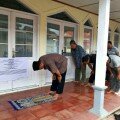
Some two dozen men, women and children have gathered for the same purpose this night, sitting at one side of the small mosque’s terrace, unable to enter the building because it was sealed off by the local government on June 26, just two days before the start of Ramadan.

Unable to perform their prayers inside, the courtyard became the venue of this month’s tarawih for the mosque’s congregation. Although Muslims can and do pray at home, many like Enok choose to pray at the terrace in an act of defiance — sometimes at their own risk.

It was raining cats and dogs on this particular night when the tarawih was performed, the wind blowing bitterly cold; Enok was shivering uncontrollably.

“I feel so sad. This is a house of prayer. Why did [the government] shut it down?” she says after the prayer.

Enok is a member of the Ahmadiyah, a minority Muslim group that has been accused of blasphemy by Sunni Muslims and subjected to countless acts of violence, intimidation and discrimination.

No time for peace

For many Muslims, the holy month of Ramadan is meant to be a time of peace, a chance to sideline earthly worries and focus on the spiritual; but this is hardly the case for Indonesia’s Muslim minority groups like the Ahmadiyah.

“We were banned from performing our prayers inside [the mosque], but the ban doesn’t say anything about the terrace,” says Dadan Andriana, a spokesman for the Ciamis chapter of the Indonesian Ahmadiyah Congregation (JAI).

Dadan says despite the loophole, there is still the risk that hard-line groups, which have long deemed it halal, or permissible in God’s eyes, to shed the blood of Ahmadis, may feel provoked and decide to attack the congregation.

“That is our biggest fear. When we pray, we don’t feel at peace at a time like this,” Dadan says, adding that each night two or three Ahmadiyah men stand guard during the prayers.

A congregation of the minority group praying on the terrace of their sealed-off mosque in Ciamis. (JG Photo/Yuli Krisna)

A congregation of the minority group praying on the terrace of their sealed-off mosque in Ciamis. (JG Photo/Yuli Krisna)

The Ahmadiyah congregation in Ciamis is not alone, says Syaiful Uyun, a senior cleric for the group in West Java. He notes that ever since a gubernatorial decree banning the Ahmadiyah was issued in 2011, acts of violence toward the congregation have escalated.

“In Tasikmalaya, an Ahmadiyah mosque was taken over. In Tolenjeng [another mosque] was burned and destroyed. In Sukapura, they also burned and ransacked [a mosque], and in Banjar they sealed [off a mosque],” he says.

For the Ahmadiyah congregation in Tasikmalaya’s Singaparna subdistrict, performing the tarawih as a group is no longer an option. “Every time we hold a communal prayer like the Friday prayer or Koranic recitals, we are always attacked by a group of people,” says Nanang Ahmad Hidayat, the head of the JAI’s Singaparna chapter.

The local Ahmadiyah mosque was last attacked in June 2007 and since then largely abandoned, with JAI leaders instructing the 500-strong congregation in Singaparna to pray in the safety of their homes. Even the mosque’s Islamic school had to be moved to another village.

For the last seven years, the mosque has only hosted groups of five to 10 people praying at a single time, Nanang says, while the rest perform the tarawih at home or at mushalla, prayer houses.

Rising intolerance

According to the religious freedom advocacy group The Setara Institute, cases of religious intolerance have been on the rise since President Susilo Bambang Yudhoyono took office in 2004. In 2012, the group recorded 371 cases of religious violence, intimidation and discrimination, up from 299 cases in 2011.

The Wahid Institute, another religious freedom advocacy group, recorded a similar increase, from 184 cases of religious violence in 2010 to 274 in 2012.

According to the National Commission on Human Rights (Komnas HAM), there were 20 cases of houses of worship being closed or attacked in 2012, and 17 cases where religious gatherings were attacked or disrupted.

JAI Ciamis spokesman Dadan says his congregation will not buckle without a fight. Since its mosque was sealed off last month, the congregation has repeatedly requested a meeting with Ciamis district head Iing Syam Arifin, but to no avail.

Dadan says the closure has no legal basis. The JAI also questions why the decision was done by “Muspida Plus,” which means a party other than the Muspida (Regional Leadership Board, comprising representatives of the local government, military, police, community and religious groups) was involved.

“We suspect that the Muspida Plus refers to the FPI,” he says, referring to the Islamic Defenders Front, a hard-line group notorious for its attacks on religious minorities such as the Ahmadiyah and the Shiites.

The JAI has also called on Komnas HAM and the Indonesian Ombudsman to weigh in on the closure and demand an explanation from the district chief.

In Wanasigra subdistrict, Tasikmalaya, the local Ahmadiyah congregation feels it is safe enough to hold regular communal tarawih prayers at its mosque. Each night during Ramadan, the Al Fadhal mosque is packed with Ahmadis listening to the pre-prayer sermon and staying on to perform the tarawih.

All 700 people in the village are Ahmadis, the congregation says, providing some security. But worries still linger.

On May 5 last year, the village was attacked by a mob of 150 machete-wielding men, who damaged 24 homes as well as the village’s main mosque.

“What I can’t understand is why the 100 heavily armed, heavily equipped police officers [deployed before the attack] did little to stop these people,” says Syamsul Ma’arif, who was in charge of the village’s security at the time.

For Khairunnisa, a resident, last year’s attack only reaffirmed her faith and emboldened her to pray at the mosque.

“I just leave everything to God. If we are afraid and we don’t go to the mosque, it is our loss,” she says.

Undeterred

Just as unperturbed by threats and the growing hatred toward his community is Hesti Rahardja, a Shiite and chairman of West Java chapter of the Indonesian Ahlul Bait Congregation (Ijabi).

He says the Shiites in Bandung continue to carry out religious activities this Ramadan, including breaking the fast with orphans and the poor, or holding religious discussions, despite several hard-line groups in Bandung forming an Anti-Shia Alliance just two months before Ramadan.

The alliance “doesn’t bother us at all. Usually the more someone is threatened, the better his prayers are,” Hesti says with a smile. “We are fine with people hating us… We respect their right to express themselves. As long as it doesn’t break the law we can’t complain.”

Shiites having a prayer discussion in Bandung, West Java. (JG Photo/Yuli Krisna)

Shiites having a prayer discussion in Bandung, West Java. (JG Photo/Yuli Krisna)

But Hesti is concerned that the formation of the alliance has set a bad precedent for the country. “In the end there will be hatred. Maybe now it is Ijabi, but one day others may be targeted as well. That’s something we don’t want,” he says.

Last November several Shiite groups in Bandung, Surabaya, Makassar, Yogyakarta and Jakarta were harassed as they tried to celebrate Assyura, the Shiite Day of the Martyrs. In Bandung several hard-liners blocked the entrance to a building where the Assyura was scheduled to take place, forcing the local congregation to find another venue.

Hopes for next president

JAI cleric Uyun says he has high hopes for this year’s presidential election, predicted to be won by reform-minded and moderate candidate Joko Widodo.

“I really hope our next president will uphold the Pancasila [national ideology], the Constitution, Bhineka Tunggal Ika [national motto of ‘Unity in Diversity’],” he says. “If we uphold Pancasila, there will be no more closures of mosques and other houses of worship.

“The government should only facilitate, not interfere with people’s beliefs. Deeming someone blasphemous or righteous should be left up to God.”

JAI Ciamis spokesman Dadan says the next president must resolve past cases of rights abuses and religious violence.

“Whoever is elected… human rights violations, specifically against religious freedom, must be resolved clearly. There should be no more people being threatened and intimidated because of their faith. No more houses of worship or mosques closed down,” he says.

_
By Yuli Krisna on 12:25 p.m., Jul 20, 2014
Category Featured, News, Religion
Tags: Ahmadiyah, minority religions

Posted in Nasional, PersekusiComments (0)

Sepekan setelah buka segel, Ahmadiyah Ciamis tenang beribadah

KBR, Jakarta- Jemaat muslim Ahmadiyah masjid Nur Khilafat, Ciamis, tetap beribadah dengan tenang sejak segel masjid dibuka, Jumat pekan lalu.

Pengurus Jemaat Ahmadiyah Ciamis, Padhal Ahmad, mengatakan sudah seminggu masjid aman dari gangguan kelompok intoleran. Saat ini jemaat kembali rutin menggunakan masjid untuk sholat lima waktu dan tarawih. Kata dia, kepolisian hanya sempat berjaga pada sholat Jumat lalu.

“Alhamdulillah kalau sholat masih biasa, aman. (Masjid rutin digunakan untuk sholat?) Alhamdulillah masih normal. Kemarin ada polisi jaga di sekitar masjid, memakai baju preman (bebas) bukan baju polisi,” kata Padhal saat dihubungi KBR, Sabtu (12/07).

Jemaat muslim Ahmadiyah masjid Nur Khilafat membuka sendiri segel masjid mereka, Jumat pekan lalu.

Pembukaan dilakukan sendiri setelah bupati tidak menanggapi protes mereka. Pembukaan itu disaksikan belasan aktivis HAM. Masjid ini disegel bupati Ciamis, akhir Juni lalu, atas desakan kelompok intoleran.

Editor: Dimas Rizky

Posted in UncategorizedComments (0)

Surat Permohonan Perlindungan Pembukaan Segel Masjid Ciamis

Ahmadiyah Ciamis dan Kontras Memohon Perlindungan Kepolisian Pasca Pembukaan Segel Masjid

Ciamis. Jamaah Ahmadiyah Ciamis beserta Kontras, LBH Bandung, dan jaringan Sobat KBB melakukan pembukaan segel masjid Nur Khilafat pada 4 Juli 2014. Penyegelan ini dilakukan secara tidak sah oleh aparat Muspida melalui Satpol PP pada 26 Juni 2014.

Kegiatan pembukaan segel ini berpotensi mendapat gangguan keamanan dari pihak ormas atau kelompok intoleran yang mendukung penyegelan. Untuk mencegah hal ini terjadi maka Kontras mengirim surat kepada Kapolres Ciamis dengan judul surat Permohonan Perlindungan Kegiatan Pembukaan Segel Masjid Nur Khilafat.

Dalam surat tersebut dicantumkan Pasal 13 UU No. 2 Tahun 2002 Tentang Kepolisian Negara Republik Indonesia

Tugas pokok Kepolisian Negara Republik Indonesia adalah:

  1. Memelihara keamanan dan ketertiban masyarakat;
  2. Menegakkan hukum; dan
  3. Memberikan perlindungan, pengayoman, dan pelayanan kepada masyarakat.

Oleh karena itu, KontraS meminta kepada Kapolres Ciamis untuk:

Pertama, memberikan jaminan perlindungan dan keamanan atas kegiatan pembukaan segel Masjid Nur Khilafat.

Kedua, memberikan informasi yang akurat mengenai ancaman keamanan terhadap pihak JAI Ciamis pada saat atau setelah segel dibuka kepada pihak JAI Ciamis.

Ketiga, mengerahkan anggota kepolisian untuk memberikan perlindungan pada kegiatan pembukaan segel sesuai dengan tingkat ancaman keamanan.

Posted in Nasional, PersekusiComments (0)

ahmadiyah bandung buka bersama ibu sinta nuriyah wahid

Jamaah Ahmadiyah Bandung Buka Bersama Ibu Sinta Wahid

Berawal dari sms undangan H. Mansur (Ketua Jemaat Bandungg Tengah), bahwa akan ada acara dialog kemanusiaan dan buka puasa bersama, bersama Ibu Sinta Nuriyah Wahid. Hari senin 30 juni 2014 kami dari pengurus Jamaah Ahmadiyah Bandung hadir 17 . Acara tersebut bertempat di Gereja Paroki Jl. Suryalaya no 3 Buah Batu. Dihadiri kurang lebih 300 orang dari berbagai elemen masyarakat dan organisasi keagamaan diantaranya dari Jamaah Ahmadiyah, Lentera Nusantara, Paroki Hati Tak Bernoda Santa Perawan Maria Bandung, Puan Amal Hayati, Percik Insani, HIPMMU Bandung, Jakatarub, kaum buruh, karyawan pabrik, pembantu rumah tangga, abang becak, kaum disable, dan perkumpulan anak-anak autis Bandung, dll.

Acara di mulai pukul 16.30 di awali sambutan oleh panitia penyelenggara di lanjutkan sambutan dari Lurah Cijagra Ibu Nurma menyampaikan tentang program pemerintah kota Bandung yaitu gerakan pungut sampah agar dibudayakan, dan agar memilih di pilpres tgl 9 juli jangan jadi golput. Acara dilanjutkan dengan menampilkan jaipong oleh anak autis, kemudian penampilan Lentera Nusantara membawakan musik tradisional.

Dilanjutkan acara pokok dialog yang di pimpin Ibu Sinta Nuriyah Wahid,  dalam pemaparannya bahwa kegiatan buka puasa dan sahur bersama pada bulan ramadhan ini sudah beliau lakukan kurang lebih 14 tahun dan dalam pelaksanaannya sering bekerjasama dengan pihak gereja bertujuan untuk membantu umat muslim yg melaksanakan ibadah puasa dalam melaksanakan kewajibannya dan yang terutama membangun tali persaudaraan diantara umat beragama.

Dalam sesi tanya jawab diantara penanya dari pihak Ahmadiyah yaitu H. Mansur menanyakan bahwa akhir-akhir ini terjadi diskriminasi pada Ahmadiyah diantaranya di Bekasi dan Ciamis, dulu waktu presidennya Gusdur kami mengadu ke beliau namun sekarang kepada siapa?? Ibu Shinta menjawab bahwa pengamatan beliau terhadap calon presiden sekarang belum terlihat kecendrungan membela kaum minoritas dan saat ini perjuangan Gusdur tengah dilanjutkan oleh putri-putri beliau walaupun anak-anak Gusdur perempuan semua namun semangatnya tidak kalah dengan kaum pria untuk itu mengharapkan dukungannya terhadap perjuangan putri-putri beliau. Akhirnya karena sudah memasuki waktu buka puasa yang ditandai oleh adzan maghrib acara diakhiri dengan berbuka puasa bersama dengan mencicipi kolak, waktu tersebut dimanfaatkan untuk poto bersama dengan Ibu Sinta; pengurus daerah Lajnah Imaillah, pengurus AMSA Priangan Barat dan Ketua Jemaat Bandung tengah sambil memberikan bingkisan paket buku-buku. (Didim)

Posted in NasionalComments (0)

Ahmadiyah Ciamis Kembali Sholat Jumat di Masjid

Warga Ahmadiyah Ciamis Kembali Shalat Jumat di Masjid

CIAMIS, KOMPAS.com – Warga Ahmadiyah di Kabupaten Ciamis, Jawa Barat, kembali melakukan ibadah shalat Jumat di Masjid Nur Khilafat, Jumat (4/7/2014). Hal itu bisa dilakukan karena segel yang dipasang oleh Satpol PP pada Kamis (26/6/2014) lalu, telah dibuka.

“Alhamdulilah, mudah-mudahan bisa terus seperti ini,” ujar Henda, warga Ahmadiyah, usai menunaikan ibadah shalat di Masjid Nur Khilafat, Ciamis, Jabar.

Sebelumnya, akibat penyegelan, warga Ahmadiyah terpaksa melaksanakan ibadah shalat di rumah milik jemaah. Mubaligh Ahmadiyah Priangan Timur Muhammad Syaeful Uyun, memimpin langsung ibadah shalat jumat.

Yeti, warga Banjar, Jawa Barat, yang datang saat pembukaan segel Masjid di Ciamis, berharap agar masjid tersebut dapat digunakan sebagaimana mestinya. “Kita cuma shalat dan ngaji. Selain kegiatan ibadah, tidak ada yang dilakukan,” ujar Yeti.

Yeti juga berharap kepada calon presiden mendatang, agar lebih memperhatikan warga minoritas, khususnya masalah penutupan tempat-tempat ibadah.

Posted in Nasional, PersekusiComments (0)

Ahmadiyah Ciamis Buka Segel Masjid

Jemaah Ahmadiyah Ciamis Buka Segel Masjid

TEMPO.CO, Ciamis – Jemaah Ahmadiyah membuka paksa segel yang dipasang Satpol Pamong Praja Kabupaten Ciamis di tiga pintu Masjid Nur Khilafat yang berada di Jalan Cipto Mangunkusumo, Kabupaten Ciamis, Jawa Barat, Jumat, 4 Juli 2014. Pembukaan segel menyusul nihilnya respons pemerintah daerah terkait dengan keinginan jemaah untuk mengetahui alasan penyegelan.

“Kami sudah surati dan sudah mencoba jumpa beliau (bupati) untuk berkomunikasi, bicara hati ke hati. Tetapi tidak ada respons,” kata mubalig jemaah Ahmadiyah Priangan Timur, Muhammad Syaiful Uyun, seusai pembukaan segel, Jumat, 4 Juli 2014.

Menurut Uyun, sebelum membuka segel, jemaah Ahmadiyah sudah mengirim surat kepada bupati bahwa akan melepas segel di tiga pintu masjid. Adapun bekas segel yang berbentuk banner akan dikembalikan ke muspida. “Nanti dikembalikan ke Muspida Ciamis,” ujarnya. Dia menilai penyegelan tak disertai alasan sahih. Surat Keputusan Bersama Tiga Menteri dan Peraturan Gubernur tak menyatakan pemerintah daerah harus menutup masjid.

Pembukaan segel, Uyun menambahkan, karena saat ini merupakan bulan Ramadan. Bulan Ramadan, kata dia, adalah bulan ibadah. “Jadi yang harus ditutup itu tempat-tempat maksiat. Masjid bukan tempat maksiat,” ujar Uyun.

Atas dasar itulah, Uyun mengatakan, jemaah memberanikan diri membuka segel. “Saya harap bupati memahami niat baik kami. Apalagi di sini berlaku kebebasan beragama,” dia menjelaskan.

Ditanya soal kesiapan JAI jika ada pihak-pihak yang tidak setuju dengan pembukaan segel, Uyun mengatakan, Ahmadiyah tidak mengharapkan hal itu terjadi. Terlebih saat ini merupakan bulan suci Ramadan. “Ini bulan untuk membangun kedamaian. Jangan sampai ada penodaan terhadap bulan suci,” ujarnya.

Uyun menambahkan, di dalam masjid Ahmadiyah tidak ada aktivitas yang bertentangan dengan ajaran Islam. Menurut dia, jemaah Ahmadiyah 100 persen Islam dan 100 persen bangsa Indonesia. “Fungsi masjid untuk beribadah,” ia menerangkan.

Posted in Nasional, PersekusiComments (0)

Dukung Petisi Pembukaan Masjid Ahmadiyah Ciamis Ini!

KBR, Jakarta\ – Solidaritas Korban Tindak Pelanggaran Kebebasan Beragama dan Berkepercayaan membuat mendesak Presiden Susilo Bambang Yudhoyono membuka Masjid Ahmadiyah Ciamis, Jawa Barat yang disegel. Untuk mengugatkan desakan itu mereka membuaut Petisi.

Petisi dibuat di situs Change.org oleh Koordinator Sobat KBB, Pendeta Palti Panjaitan. Petisi itu nantinya akan dikirim ke Bupati Ciamis, Iing Syam Arifin. Mereka minya Iing membuka kembali masjid dan menjaga hak-hak warganya untuk beribadah.

Penutupan Masjid Ahmadiyah di Ciamis dilakukan pada Kamis, (26/6) oleh Satpol PP Ciamis. Hal tersebut dilakukan tanpa ada pemberitahuan sebelumnya kepada Jemaah Ahmadiyah.

Berikut isi lengkap petisi tersebut:

Memasuki bulan Ramadhan, senin ( 23/6) kelompok FPI melakukan pawai, menemui Bupati Ciamis dan menuntut Ahmadiyah dilarang di Ciamis.

Kata Bupati, “Secara pribadi, bukan jabatan, saya menolak mengenai masalah Ahmadiyah. Secara jabatan ada aturan yang menghalangi itu dan jelas Bupati mengamankan aturan yang lebih atas. Hanya mengenai masalah Ahmadiyah ada beberapa langkah yang tadi kita sepakati dengan Kang Wawan, Insya Allah. Insya Allah kalau hari ini belum ada langkah konkrit, mungkin kita akan bicarakan. Karena menyangkut daripada aktivitas itu adalah ada aturan proses hukum yang harus ditempuh.”

Tiga hari kemudian Satpol PP datang ke Masjid warga Ahmadiyah, menutup masjid yang sudah berdiri sejak tahun 1960-an, lebih lama daripada lahirnya kelompok massa itu. Kepala Satpol PP menyatakan menutup masjid atas dasar Musyawarah Pimpinan Daerah (Muspida) PLUS. Belom tahu plus apa itu.

Kakek Nenek kita berjuang sampai mati untuk merdeka dari penjajahan, agar kita hidup aman dan damai. Kenapa sekarang Bupati bisa mencabut hak kita? Kalau memang tidak setuju atas sebuah masalah atau warga tertentu, ada kok cara beradab yaitu peradilan dan Undang-Undang, jangan main kuasa sepihak.

Saya tahu rasanya saat tempat yang kita pakai beribadah ditutup. Tak cuma sulit ibadah, tapi bingung menjelaskan ke anak saya kenapa sekarang selalu ibadah di rumah, jarang bersama-sama lagi. Gereja yang saya pimpin di Bekasi sudah dapat ijin Mahkamah Agung, sah dan tidak terbantahkan. Tapi tetap saja ditutup paksa. Kalau saya beribadah di halaman gereja, tiba-tiba ada kelompok penganggu yang teriak-teriak sampai lempar telor busuk.

Tidak cuma gereja, kawan saya dari Kupang juga sulit mendirikan Masjid di tengah kota mayoritas warga Kristen. Di tempat lain ada penganut Hindu, Budha, aliran kepercayaan bernasib sama. Bahkan kawan saya Muslim Syiah di Sampang diusir dari kampung mereka oleh muslim lain.

Jadi ini bukan masalah satu kelompok saja, kejadian-kejadian ini bisa terjadi pada siapapun di tempat-tempat yang berbeda. Sebenarnya tugas Negara lewat Polisi dan Kepala Daerah untuk menjaga dan menfasilitasi agar kita semua bisa beribadah dengan damai dan aman.

Sekarang saya minta dukungan kawan-kawan semua minta Bupati Ciamis agar membuka kembali Masjid Ahmadiyah dan menjaga hak-hak setiap warganya untuk beribadah.

Salam Bhinneka!

Pdt. Palti Panjaitan
Koordinator Sobat KBB (Solidaritas Korban Tindak Pelanggaran Kebebasan Beragama dan Berkepercayaan)

Mohon untuk mendukung petisi ini dengan mengirimkan ke:

  • Presiden RI. H. Soesilo Bambang Yudhoyono
  • Menteri Dalam Negeri RI
  • Kapolri
  • Kapolda Jawa Barat
  • Gubernur Jawa Barat
  • Bupati Ciamis


Ingin mendukung petisi ini? Silakkan masuk ke laman ini: CHANGE.org.

_
Editor: Pebriansyah Ariefana

Posted in NasionalComments (0)

Page 1 of 3123

@WartaAhmadiyah

Tweets by @WartaAhmadiyah

http://www.youtube.com/user/AhmadiyahID

Kanal Youtube


Tautan Lain


alislam


alislam


alislam


alislam

Jadwal Sholat

shared on wplocker.com