W3vina.COM Free Wordpress Themes Joomla Templates Best Wordpress Themes Premium Wordpress Themes Top Best Wordpress Themes 2012

Tag Archive | "shia"

Indonesia drafting bill to protect all religions

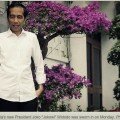
President Joko “Jokowi” Widodo’s government is working on a proposed law aimed at promoting communal harmony and ridding the diverse nation of religious intolerance.

By Zahara Tiba for Khabar Southeast Asia in Jakarta

December 16, 2014

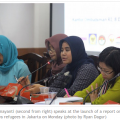
Leaders of religious minority groups are reacting positively to a move by the new government to draft a bill that would promote inter-faith tolerance and protect followers of such religions.

“We really appreciate this brave step taken by the minister,” Sheila Soraya, a spokeswoman for the Baha’i National Spiritual Assembly, told Khabar Southeast Asia, referring to Minister of Religious Affairs Lukman Hakim Saifuddin, who proposed the bill recently.

“I hope it will shed the discrimination we have been facing as a minority. We will support every effort for equality.”

Reverend Palti Panjaitan, pastor of Filadelfia Batak Protestant Church (HKBP Filadelfia), an embattled congregation in Bekasi, expressed a more guarded opinion about the prospective bill.

“It could mean protecting all religious followers unconditionally, or protecting only religions officially acknowledged by the government from other faiths,” he said. “If the bill is applied on the first condition, it means a lot to all of us, giving a bright future to our religious freedom.

“We will definitely give it full support. But if it means the second, we are against it.”

Yet, the pastor added if the government applied the constitution strictly and ratified international laws on human rights, the ministry needn’t draft the bill. Chapter X of the Indonesian charter states that all citizens are equal before the law. It also guarantees human rights, including the right to religious freedom.

“But if it is important and urgent to protect all religious freedom, so be it. It gets my support,” Palti told Khabar.

Upholding the right to worship freely

Lukman announced his plan to draft the bill in late October. It would cover religious minorities among the country’s six recognised faiths, adherents of unofficial faiths, as well as members of minority Muslim groups, such as Shia Muslims or members of the Ahmadiyah sect.

“In the next six months, we will prepare this bill to protect all religious groups, including those outside of the six major religions: Islam, Catholicism, Protestantism, Hinduism, Buddhism, and Confucianism,” Lukman told reporters in Jakarta on October 29th.

“The bill will protect everyone’s right to religious freedom, as guaranteed by the Constitution. It includes the right to believe in whatever they choose to lay their faith in and the independence to practice their beliefs. We hope the bill can improve the quality of life,” he added.

The future bill, he said, would protect all religious groups from attacks on their places of worship or efforts by intolerant people to shutter them. If enacted, it would also allow all religious groups to obtain building permits through a regulated system.

“We’ll hold regular interfaith forums for religious teachers to make sure that everyone has the same point of view. Though we have different beliefs, all religions teach the same lessons of promoting humanity,” Lukman said.

Promoting peaceful co-existence

The bill Lukman proposes represents a breakthrough for the newly installed government of President Joko “Jokowi” Widodo, according to interfaith studies professor Novriantoni Kahar, who lectures at Paramadina University.

“I hope it will help boost religious tolerance among us, bring harmony, and create more productive lives,” he said.

Asked whether the bill could become law and effectively shield minorities from attacks by radical groups, Novriantoni replied it is possible – under one condition.

“The government must ensure that all elements help enforce the law as soon as the law is ready. It is important to understand how the law will be applied,” the academic told Khabar. “All this time such laws have been applied to minorities while radicals have walked free.”

Novriantoni stressed that he bill should also bar hateful speech .

“That would effectively protect minorities. In civilised countries, people spreading hate speech deserve to be punished,” he added.

Andhika Bhakti in Jakarta contributed to this article.

Posted in Nasional, PerspektifComments (0)

First non-muslim to be sworn in as Jakarta Governor

Eyewitness News

The secular country of 240 million people has seen a rise in attacks over the last decade against Christians, Shia Muslims and members of Ahmadiyah, a small Islamic sect.

Deputy Governor Basuki Tjahaja Purnama will be sworn in despite protests over his appointment.

Reuters | 14 days ago

JAKARTA – Jakarta’s first Christian governor in nearly 50 years is expected to be sworn in on Wednesday, despite protests from religious hardliners opposing a non-Muslim taking over one of Indonesia’s most powerful political jobs.

President Joko Widodo will take part in the swearing-in of Deputy Governor Basuki Tjahaja Purnama, better known by his nickname “Ahok”, the presidential palace said.

Ahok has been serving as acting governor since Widodo stepped aside last month to become president.

Hundreds of religious hardliners have staged protests against Ahok, underlining the difficulties facing the president’s battle against intolerance in a nation with the world’s biggest Muslim population.

Ahok is also ethnic Chinese, a small minority that have been resented in the past for their wide control over trade and business.

Thousands of police have been deployed around the capital this week in case of violence.

Ahok’s inauguration was postponed earlier this week to allow for a presidential decree on his appointment. The Home Affairs Minister Tjahjo Kumolo said it would take place next week, the Jakarta Globe reported on Tuesday.

It was not clear why the ceremony was moved up to Wednesday.

The secular country of 240 million people has seen a rise in attacks over the last decade against Christians, Shia Muslims and members of Ahmadiyah, a small Islamic sect.

Widodo’s administration, which took office last month, has pledged to protect all religious minorities in Indonesia, where nearly 90 percent of the population consider themselves Muslim.

But experts believe Widodo will be hamstrung by parliament, which is controlled by the opposition.

“I do not have high hopes for (Widodo’s) administration … because parliament is not controlled by his coalition,” said Andreas Harsono, Indonesia director for Human Rights Watch.

Posted in Nasional, PerspektifComments (0)

Australia needs to talk human rights issues with Indonesia

THOSE targeted include Muslim sects such as the Shia and the Ahmadiyah as well as Christians and adherents to nativist beliefs.

The Canberra Times; Andreas Harsono

PRIME Minister Tony Abbott had the opportunity to restart his “more Jakarta, less Geneva” foreign policy when he attended the inauguration of Indonesia’s new president, Joko “Jokowi” Widodo yesterday. Abbott now also has a rare and vital opening to engage on human rights issues.

Such engagement is crucial for Australia to maintain a strong and sustainable bilateral relationship with its northern neighbour. Indonesia’s human rights situation has deteriorated over the decade of Susilo Bambang Yudhoyono’s presidency, and Australia can and should play an important role in encouraging Widodo to act quickly to end increasing abuses.

The alarming rise in religious intolerance and related violence in Indonesia should be a priority in Australia’s engagement with Widodo and his government. Yudhoyono was reluctant to act against Islamist militants who attack religious minorities, or to revise discriminatory regulations. Those targeted include Muslim sects such as the Shia and the Ahmadiyah as well as Christians and adherents to nativist beliefs. According to the Setara Institute, a non-profit think tank monitoring religious freedom, incidents of religious violence increased from 91 cases in 2007 to 220 cases in 2013. Widodo himself has made a good start by stating that he will protect the constitutional rights of the country’s minorities.

Since 1963, successive Indonesian governments have blocked international media form visiting Papua -including Australian media – to allow only those foreign reporters who get special official permission. Two French reporters, detained in Papua since August 6 for “illegal reporting,” are the most recent victims of Indonesia’s Papua censorship obsession.

Widodo visited Papua on June 5 and told reporters that if elected president he would open access to Papua for foreign journalists and international organisations. On October 1, the Australian Senate passed a motion calling for Indonesia to release the two journalists as a sign of Jokowi’s “commitment to a more open” Papua. Abbott should support Widodo’s intention to lift restrictions on foreign journalists from freely reporting in Papua.

The Australian government should also support redress for Indonesia’s many victims of abuses committed by government security forces over the years. Ten years ago, outspoken Indonesian human rights advocate Munir was murdered. Despite evidence implicating Indonesia’s domestic intelligence agency, the masterminds of his killing have evaded justice. Munir is one of many victims of a culture of impunity rooted in Indonesia’s three decades of authoritarian rule where successive Indonesian governments have failed to prosecute the worst offenders or provide redress.

Widodo has publicly committed to investigating the arrest, torture and enforced disappearance of dozens of pro-democracy activists by security forces in the dying months of the Suharto regime. The Australian government should impress upon Widodo that the rule of law requires a meaningful and transparent accounting of all serious abuses.

The Australian and Indonesian governments also have an opportunity to work together to address their mutual failings in respecting international standards of protection for refugees and asylum seekers. In 2013, the Australian government introduced pernicious policies designed to deter asylum seekers, including mandatory offshore processing of asylum seekers arriving by boat, “enhanced screening” or fast-tracked deportations after cursory interviews, and withdrawing government-provided legal assistance to asylum seekers. Australian defence officials charged with the asylum-seeker response now regularly refuse to answer questions from journalists, citing vague “national security” concerns at the expense of the public’s right to information.

The Indonesian government likewise has a dismal record in respecting the rights of migrant and asylum-seekers, including children. Hundreds of migrant and asylum-seeking children are detained every year in sordid conditions, without access to lawyers, and sometimes beaten. Others are left to fend for themselves, without any assistance with food or shelter.

The Australian government should respect its obligations under the 1951 Refugee Convention, which it ratified in 1954. The Indonesian parliament should ratify the convention as soon as possible to ensure that refugees and asylum seekers, including children, receive the convention’s protections.
Addressing Indonesia’s human rights problems demands that President Widodo allocate no small amount of political capital and sustained political will. Abbott can play an important role in the success of those efforts by signalling his support for Widodo’s moves to make universal rights a key part of his administration.

_
Andreas Harsono is Indonesia researcher for Human Rights Watch.

Posted in Nasional, PerspektifComments (0)

New home minister to delve into minority issues

THE Commission for Missing Persons and Victims of Violence (Kontras) recorded 21 bylaws that had been issued by regional governments between 2005 and 2011 to disband any religious activities by members of the Ahmadiyah community, putting the Ahmadis under threat from locals and radical organizations.

The Jakarta Post

Newly appointed Home Minister Tjahjo Kumolo has said that he will scrutinize problems faced by minority groups over the past decade.

The Indonesian Democratic Party of Struggle (PDI-P) politician said that he would make an inventory of what could be categorized as minority problems.

“We will ask [for data] on what has happened in the past decade,” he said on the sidelines of the Cabinet inauguration on Monday at the Presidential Palace.

He added that he would soon summon governors, mayors and regents to hear directions regarding a plan on financial austerity from President Joko “Jokowi” Widodo.

“We will deliver messages from Bappenas [the National Development Planning Board] and the Finance Ministry so that regional heads can understand about the limitation of [the current] state budget and will be able to anticipate [conditions],” said Tjahjo, referring to soaring fuel prices that may push the Jokowi administration to relieve some subsidies to make larger fiscal room for development programs.

Tjahjo, who is currently still serving as PDI-P secretary-general, is among five PDI-P members appointed in the new Cabinet.

A career politician and lawmaker, Tjahjo has never acquired public office before. The nationalistic background of the PDI-P, however, has given hope that he will be able to reform the conservative approach of home ministers from the time of the Susilo Bambang Yudhoyono administration.

Previously, Yudhoyono preferred to give the ministerial post to former military officers or local bureaucrats, which led to violent incidents with religious minority groups.

Human rights watchdogs recorded a rising number of incidents among religious groups during Yudhoyono’s two terms.

The Commission for Missing Persons and Victims of Violence (Kontras) recorded 21 bylaws that had been issued by regional governments between 2005 and 2011 to disband any religious activities by members of the Ahmadiyah community, putting the Ahmadis under threat from locals and radical organizations.

A political analyst from the Indonesian Civilized Circle (Lima), Ray Rangkuti, suggested that Tjahjo would be more open-minded in handling sectarian conflicts compared to his predecessor Gamawan Fauzi.

“Looking at his character and his background as a [PDI-P] politician, I believe that Tjahjo will be more tolerant. He tends to go against mass organizations that often create trouble, such as the Islam Defenders Front [FPI], but he will handle those according to regulations,” Ray said.

Human rights defender Hendardi, who chairs human rights watchdog the Setara Institute, said that the first challenge for Tjahjo would be to end discrimination against minorities like the Ahmadi and Shia groups.

He was referring to the Islamic sect of the Shia community based in Sampang, East Java, whose hundreds of members remain banned from returning home after they were forcibly evicted from their villages when their homes were burned by a group of people claiming to be representatives of the majority Sunni Muslims in August 2012.

Similarly, members of the Ahmadiyah community in Ketapang, West Nusa Tenggara (NTB), have been living in a local shelter after a mob claiming to be members of the Sunni majority attacked and burned their houses eight years ago.

Adding to discrimination imposed on the country’s religious minorities, the GKI Yasmin church in Bogor, West Java, has remained sealed for more than 10 years despite a ruling by the Supreme Court, the country’s highest legal institution, stipulating its legitimacy.

“[Along with the Religious Affairs Ministry and the Law and Human Rights Ministry] Tjahjo must also revoke all laws and regulations that accommodate discrimination against the country’s religious minority groups, such as, among other things, the bans on Ahmadiyah as well as a 2006 joint ministerial decree on places of worship,” Hendardi said.

The 2006 joint ministerial decree stipulates that congregation members must secure approval from at least 60 local residents of different faiths and the government-sponsored Regional Interfaith Harmony Forum (FKUB) before establishing a house of worship.

Robert Endi Jaweng, executive director of the Regional Autonomy Watch (KPPOD), specifically called on Tjahjo to keep a close watch on the development of Aceh and Papua, two provinces are that still marred with political instability, as well as economic and security concerns.

“I was hoping that the new home minister would be someone who has experience in governing. But now, we have Tjahjo, a politician. He may face challenges in building communication with special regions, particularly Aceh and Papua, and coordinating with respective ministries to ensure that sufficient funds and the right policies are in place to propel these regions’ development,” he said. (idb)

_
Hasyim Widhiarto contributed to this article
PIC: Tjahjo Kumolo. JP

Posted in Nasional, PerspektifComments (0)

Indonesian province turns up Sharia law after devastating tsunami

ANDREAS HARSONO: There are two groups that are actually threatened by this formalization of the Sharia. The first group is religious minorities. More than 20 churches are closed down in Aceh over the last two years. They also banned 14 Islamic religious sects, like the Ahmadiyya, the Shia. We didn’t expect that.

_
Andreas Harsono dari Human Rights Watch: “Dengan memberlakukan syariah di Aceh, bangsa negara Indonesia pada dasarnya membuka kotak Pandora.”

Kira Kay: “Andreas Harsono berasal dari Human Rights Watch.

Andreas Harsono: “Terdapat dua kelompok yang benar-benar terancam oleh formalisasi syariah ini.

“Kelompok pertama merupakan kaum minoritas keagamaan.

“Lebih dari 20 gereja ditutup di Aceh selama dua tahun terakhir. Mereka pun melarang 14 sekte-sekte keagamaan Islam, seperti Ahmadiyah dan Syiah.

“Kami tidak menyangka demikian.

“Korban yang kedua adalah kaum perempuan.

“Beraneka ragam, peraturan-peraturan aneh dibuat, misalnya, melarang kaum perempuan duduk mengangkangi sepeda motor.

“Pada beberapa daerah, kaum perempuan tidak boleh mengenakan pakaian celana panjang untuk pergi bekerja atau pergi sekolah, yang berarti bahwa itu membatasi mobilitas mereka. Pada akhirnya, yang demikian akan mempengaruhi pendidikan mereka.”

_
ISLAMIC Sharia law was fairly dormant in the Indonesian province of Aceh until a massive earthquake and tsunami struck in 2004, killing more than 130,000. But as residents rebuild, Sharia officers have strengthened their grip, threatening rights of religious minorities and women. Special correspondent Kira Kay reports.

PBS News Hour

TRANSCRIPT

JUDY WOODRUFF: We turn now to Indonesia, where one province, in the wake of the devastating tsunami of 2004, has embraced Islamic Sharia law.

Special correspondent Kira Kay recently traveled to Aceh province, where she was given special access to the religious police force, to bring us this inside look at how Sharia is impacting the everyday life of residents.

KIRA KAY: It’s Friday noon, time for the most important prayers of the week at mosques around the Indonesian city of Banda Aceh.
Besides the call to prayer, you can hear another sound on the streets, the loudspeaker from the Sharia police patrol.

WOMAN (through interpreter): Exit and head to the mosque in order to do Friday prayers.

KIRA KAY: Shops and restaurants are supposed to be closed during prayers, but these Sharia officers are tipped off by the motorbikes parked out front the seemingly shuttered entrances, and they break up the clandestine lunch plans of this roomful of men.

Alongside a secular legal system, Aceh enforces an official policy of Sharia. While most offenses draw only a scolding from police, there is a court system to try more serious cases, with public caning the ultimate punishment.

Ritasari Pujiastuti is the chief of Banda Aceh’s Sharia police.

RITASARI PUJIASTUTI, Chief, Sharia Police Force (through interpreter): The most common infractions we find are un-Islamic behavior, like not wearing proper clothing. Next is being alone with someone who is not your spouse, particularly in quiet places, and then gambling. We also find a lot of alcoholic drinks. We also get reports from citizens telling us whenever a Sharia violation happens in a given neighborhood.

KIRA KAY: Sitting at the northernmost tip of Indonesia, Aceh is nicknamed the verandah of Mecca. Islam first came to the country through here.

Aceh fought a three-decade war for independence from the rest of Indonesia. It didn’t win, but was given special autonomy that included Sharia. So far, Aceh is the only province in Indonesia to be given this special right.

Banda Aceh Mayor Illiza Sa’Aduddin has made Sharia a priority.

MAYOR ILLIZA SA’ADUDDIN DJAMAL, Banda Aceh (through interpreter): We are very proud that Aceh got to do this first, that this blessing was bestowed on us. Even though there are shortcomings, we are glad to be able to live under Sharia.

KIRA KAY: The system sat fairly dormant until after 2004, when a massive earthquake and ensuing tsunami rocked Aceh, killing 130,000 people. Many citizens felt the disaster was God’s punishment for their lack of devoutness, evidenced by the mosques that remained standing amidst fields of rubble.

Acehnese renewed their dedication to their faith. The tsunami recovery process also opened up long-closed Aceh to the world, and its vices, says police chief Ritasari.

RITASARI PUJIASTUTI (through interpreter): We need to constantly monitor people’s behaviors by patrol or raid because there are a lot of outside influences coming from all sides. We are safeguarding people, particularly the younger generation, who are drawn towards this wave of globalization.

KIRA KAY: Mayor Sa’Aduddin says Sharia is part of Aceh’s rebuilding process.

ILLIZA SA’ADUDDIN DJAMAL (through interpreter): We are really grateful to everyone who has helped us with the recovery and rehabilitation. Without their help, we wouldn’t be where we are today. Our challenge is to ensure that Islamic values remain in people’s hearts, so that we can build on this development in a positive way, through a generation that contributes to society.

KIRA KAY: Among young citizens of Aceh, there’s some surprising agreement with the concerns of the mayor and police chief. Sanusi was stopped by the Sharia police for driving with female friends after dark.

SANUSI (through interpreter): I was nervous when it happened, but I feel the rules are good for society, especially to guide the lives and behaviors of young people. Yes, sometimes, we feel embarrassed or annoyed, but when the Sharia police give us words of advice, we understand they are for the good of all.

EVA AGUSTINA (through interpreter): Personally, I feel comfortable. I can also express myself with the latest Islamic fashion.

KIRA KAY: At the Islamic university, young students debate the laws amongst themselves.

MASHITAH (through interpreter): People view the Sharia as something extreme. But I think Sharia is there to establish boundaries, not to imprison us.

SEPTIA MULIA (through interpreter): I don’t agree that everything should be regulated. I think it is us who should regulate ourselves, not the government who establishes what we can or can’t do.

KIRA KAY: The restrictions on young people are significant, because Sharia prohibits the close interactions of unmarried people. Banda Aceh’s only cinema was shut down, and the music scene has been censored, with some of the city’s famous punks themselves convicted of Sharia violations.

Young people can still go to the beach, but it closes at dark to avoid improper behavior, causing traffic jams at the gate. Billboards sponsored by the city remind citizens that unmarried couples cannot be alone together. This young couple knows they are breaking the law, but they have nowhere else to go and are willing to take the risk.

Other youth have taken a cat-and-mouse approach, like these young women, who are wearing lawbreaking, though stylish, pencil pants.

DEWI NURHALIZA (through interpreter): We just have to be careful. If we see the Sharia police, we run.

NURUL FITRI (through interpreter): Of course we won’t just stand there and get arrested. I could never bear the shame.

KIRA KAY: But beyond these lifestyle infringements lurk more serious human rights concerns, as Aceh’s interpretation of Sharia broadens.

ANDREAS HARSONO, Human Rights Watch: By giving the Sharia to Aceh, the Indonesians basically opened the Pandora’s box.

KIRA KAY: Andreas Harsono is with Human Rights Watch.

ANDREAS HARSONO: There are two groups that are actually threatened by this formalization of the Sharia. The first group is religious minorities. More than 20 churches are closed down in Aceh over the last two years. They also banned 14 Islamic religious sects, like the Ahmadiyya, the Shia. We didn’t expect that.

The second victim is women. There are various, strange regulations being produced, for instance, banning women from straddling motorcycles. In some areas, women cannot wear pants to go to work or to go to school, which means that it will restrict their mobilities. Ultimately, it will affect their economic rights. Ultimately, it will affect their education.

KIRA KAY: We were given special access to follow the Sharia police on their daily rounds.

WOMAN (through interpreter): We often come to parks like this, because we can see people dating or not wearing Muslim dress. We try to give them guidance on the scene. But if the violation is more serious, we will bring it to the office.

KIRA KAY: We noticed women being targeted a lot more than men. These store clerks were chased because their uniforms were immodest. So was this mom for not wearing a head scarf. And this troubling scene, the berating of a young woman in the parking lot, after being caught having an affectionate outing with her boyfriend.

WOMAN (through interpreter): You will bring shame to your village. Do you understand?

AZRIANA MANALU, Lawyer, LBH Apik Aceh (through interpreter): When a man violates Sharia, people see it as a misdemeanor. But when it’s a woman, she is automatically seen as a sinner who has no place in society.

KIRA KAY: Azriana Manalu is a lawyer advocating for women facing serious Sharia violations. She says accusations of adultery are particularly traumatizing for women, but even simpler charges can ruin lives.

In 2010, two young women were caned because they were caught selling rice during Ramadan. After their public punishment, Manalu says, they fled their homes for good.

AZRIANA MANALU (through interpreter): The worst kind of punishment for women is the social stigma, even excommunication they receive from their communities. The caning hurts them for only one or two days, but the condemnation is something they will face for the rest of their lives.

KIRA KAY: Manalu also fears that communal tensions are rising as neighbors turn each other in.

AZRIANA MANALU (through interpreter): I don’t think Sharia is what people need right now. What we need is for victims of past conflict to live peacefully. We also need to put an end to corruption. These things should be taken seriously by the government, not this priority on Sharia enforcement.

KIRA KAY: Mayor Sa’Aduddin admits improvements are needed but remains firmly committed to Sharia.

MAYOR ILLIZA SA’ADUDDIN DJAMAL (through interpreter): We don’t want the officers to be authoritarian. They must truly understand their function is not to just punish people, but also to explain why they do this, and tell people not to take the law into their own hands. There must also be clear legal procedures, with witnesses and evidence.

KIRA KAY: There are now new bylaws extending Aceh’s Sharia rules to non-Muslims. For the first time this past Ramadan, Christian Chinese food shops were forced to close during the fasting period, a troubling development for a country long known for its moderate form of Islam.

Meanwhile, other parts of Indonesia are beginning to see Aceh as a model, sending local officials to observe the implementation.

JUDY WOODRUFF: This report is part of the Fault Lines of Faith series produced in partnership with the Bureau for International Reporting.

Posted in Kemanusiaan, Nasional, Persekusi, PerspektifComments (0)

Voting against Indonesia’s religious intolerance

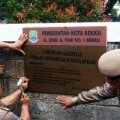
INDONESIAN Christians aren’t the only targets of discrimination by local government officials. On June 26, regency officials in Ciamis, West Java, sealed an Ahmadiyah mosque on the basis that Ahmadis are “heretics” and “blasphemous”. Syaiful Uyun, an Ahmadiyah imam, told Human Rights Watch that local governments in West Java have ordered the closure of at least 37 other Ahmadiyah mosques over the past six years.

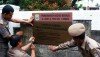
PICTURE caption: “An Ahmadiyah mosque in Ciamis in West Java. The mosque management took down their name board after a West Java govertment bans Ahmadiyah activities in 2011. Ciamis is located in southeastern West Java. Totally there are 37 Ahmadiyah mosques in trouble in the area because of violence and government discrimination.” –Andreas Harsono; Facebook.com

_
Human Right Watch

Author: Andreas Harsono
Published in: MalaysiaKini

PROTESTANT church congregations in Singkil regency in Indonesia’s Aceh province in northern Sumatra are in the market for new video hardware.

But they did not source wide-screen televisions to view 2014 World Cup matches or the candidate debates for Indonesia’s July 9 presidential election.

Instead, the 10 churches wanted closed circuit television cameras (CCTV) to defend against possible arson attacks by violent Islamist militants.

Those church congregations have reason to be afraid during this election season. Pastor Erde Berutu, the minister of one of the Singkil congregations seeking CCTV cameras, told Human Rights Watch that memories of an arson attack on a Protestant church in Aceh’s Gunung Meriah area after the April 2012 local elections made the camera purchases an urgent priority.

Unknown attackers broke into the church in the early hours, doused the church pulpit, pews and walls with gasoline and then set them alight.

Berutu worries that the aftermath of the looming July 22 announcement of the results of the country’s presidential election between Jakarta Governor Joko Widodo and retired General Prabowo Subianto might foster tensions that could lead to similar violence.

For Malaysians more familiar with Indonesia’s national slogan of ‘unity in diversity’ accounts of fearful church congregations bracing for arson attacks by Islamist militants might come as a surprise.

Intolerance eating way at harmony

But behind the Indonesian government’s rhetoric of “religious harmony” in the world’s most populous Muslim nation, there has been steady erosion in Indonesia’s tradition of religious tolerance in recent years.

The result? Indonesia’s religious minorities are increasingly under threat by Islamist militants and a government that refuses to defend their constitutional guarantees of religious freedom.

Across Indonesia, Muslim minorities, including Ahmadiyah, Shia and Sufi, as well as Catholic and Protestant groups, are targets of harassment, intimidation, threats and, increasingly, acts of mob violence.

The perpetrators are Sunni Islamist militant groups such as the Islamic Defenders Front (FPI).

They mobilise gangs that swarm minority houses of worship. The groups’ leaders justify such thuggery as attacks against “infidels” and “blasphemers”.

Indonesia’s Setara Institute, which monitors religious freedom in Indonesia, documented 220 cases of violent attacks on religious minorities in 2013, an increase from 91 such cases in 2007.

Escalation in reported cases of religious violence against minorities in Indonesia:

YEAR CASES
2007 91
2008 257
2009 181
2010 216
2011 242
2012 264
2013 220

Source: Setara Institute

Recent incidents expose the human toll behind such statistics. On May 29, about a dozen robed Islamist militants attacked a Catholic prayer service at a private home in the ancient Javanese city of Yogyakarta.

The attackers inflicted serious injuries, including broken bones, on the home owner, three of his neighbours and a journalist.

Attacks on religious minorities can also come from government officials. On May 15, municipal government officials informed the congregation of the Pentecost Church in Rancaekek, near Bandung, West Java, that their church building would be immediately and forcibly renovated into a private residence.

Pentecost Church pastor Bennhard Maukar told Human Rights Watch that the pending destruction of the church building comes three years after the local government sealed the church as an “illegal” structure.

Indonesia’s 2006 national Decree on Houses of Worship gives local governments the power to approve the construction of houses of worship but it is not clear whether the government has the authority to demolish existing structures it disapproves of.

The decree routinely results in discriminatory construction prohibitions against religious minorities. In Aceh, it is even used to prevent Christian congregations from painting or undertaking renovations of their houses of worship.

Indonesian Christians aren’t the only targets of discrimination by local government officials. On June 26, regency officials in Ciamis, West Java, sealed an Ahmadiyah mosque on the basis that Ahmadis are “heretics” and “blasphemous”. Syaiful Uyun, an Ahmadiyah imam, told Human Rights Watch that local governments in West Java have ordered the closure of at least 37 other Ahmadiyah mosques over the past six years.

The government of President Susilo Bambang Yudhoyono, who leaves office in October after 10 years in power, has been part of the problem.

Feeding the fire of discord

Officials and security forces frequently facilitate harassment of religious minorities, in some cases even blaming the victims for the attacks.

Authorities have made blatantly discriminatory statements, refused to issue building permits for houses of worship, and pressured minority congregations to relocate.

Police have sided with Islamist militants at the expense of the rights of minorities, ostensibly to avoid violence.

In some cases, police colluded with the attackers for religious, economic or political reasons.

In other instances, they lacked clear instructions from above or felt outnumbered by militants.

In all cases though, the poor police response reflects institutional failure to uphold the law and hold perpetrators of violent crimes to account.

The Religious Affairs Ministry, the Coordinating Board for Monitoring Mystical Beliefs in Society under the Attorney-General’s Office, and the semi-official Indonesian Ulama Council have all issued decrees and fatwas against members of religious minorities and pressed for the prosecution of “blasphemers.”

Advice to new president

Such behaviour contravenes the International Covenant on Civil and Political Rights, which Indonesia became a party to in 2005.

The winner of Indonesia’s presidential election on July 9 should make a decisive break with the Yudhoyono government’s failure to support and protect the rights of religious minorities.

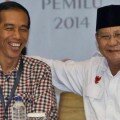
The new presiden, whether Joko (left) or Prabowo, can, and should, revoke laws facilitating religious discrimination, as well as ensure the prosecution of all those implicated in criminal threats or violence against religious minorities. To prove he’s serious, he needs to adopt a “zero tolerance” approach to religious vigilantism.

Indonesia’s partners in the Association of South-East Asian Nations (Asean) can play an important role in protecting Indonesia’s religious minorities.

They can start by making it clear to the winner of the presidential election that a key element of healthy bilateral relations between Indonesia and Asean countries is respect for the rights of religious minorities.

Asean governments should be unequivocal that official tolerance for Islamist militant thugs is an impediment to building a stronger Asean community.

Failure to do so will only ensure that more of Indonesia religious minorities will live in fear of arson attacks – or worse – upon their houses of worship.

_
Andreas Harsono is the Jakarta-based Indonesia researcher for Human Rights Watch

Posted in Nasional, PersekusiComments (0)

No Peace for Minority Groups During Ramadan

JAI cleric Uyun says he has high hopes for this year’s presidential election, predicted to be won by reform-minded and moderate candidate Joko Widodo. “I really hope our next president will uphold the Pancasila [national ideology], the Constitution, Bhineka Tunggal Ika [national motto of ‘Unity in Diversity’],” he says. “If we uphold Pancasila, there will be no more closures of mosques and other houses of worship.

TheJakartaGlobe.com

EVERY night during Ramadan, Enok Juhanah, 63, performs the tarawih, a special prayer only performed during the Islamic holy month, and every night she chooses to do it at her mosque, the Nur Khilafat, in the district of Ciamis, West Java.

Some two dozen men, women and children have gathered for the same purpose this night, sitting at one side of the small mosque’s terrace, unable to enter the building because it was sealed off by the local government on June 26, just two days before the start of Ramadan.

Unable to perform their prayers inside, the courtyard became the venue of this month’s tarawih for the mosque’s congregation. Although Muslims can and do pray at home, many like Enok choose to pray at the terrace in an act of defiance — sometimes at their own risk.

It was raining cats and dogs on this particular night when the tarawih was performed, the wind blowing bitterly cold; Enok was shivering uncontrollably.

“I feel so sad. This is a house of prayer. Why did [the government] shut it down?” she says after the prayer.

Enok is a member of the Ahmadiyah, a minority Muslim group that has been accused of blasphemy by Sunni Muslims and subjected to countless acts of violence, intimidation and discrimination.

No time for peace

For many Muslims, the holy month of Ramadan is meant to be a time of peace, a chance to sideline earthly worries and focus on the spiritual; but this is hardly the case for Indonesia’s Muslim minority groups like the Ahmadiyah.

“We were banned from performing our prayers inside [the mosque], but the ban doesn’t say anything about the terrace,” says Dadan Andriana, a spokesman for the Ciamis chapter of the Indonesian Ahmadiyah Congregation (JAI).

Dadan says despite the loophole, there is still the risk that hard-line groups, which have long deemed it halal, or permissible in God’s eyes, to shed the blood of Ahmadis, may feel provoked and decide to attack the congregation.

“That is our biggest fear. When we pray, we don’t feel at peace at a time like this,” Dadan says, adding that each night two or three Ahmadiyah men stand guard during the prayers.

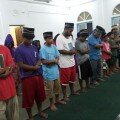
A congregation of the minority group praying on the terrace of their sealed-off mosque in Ciamis. (JG Photo/Yuli Krisna)

A congregation of the minority group praying on the terrace of their sealed-off mosque in Ciamis. (JG Photo/Yuli Krisna)

The Ahmadiyah congregation in Ciamis is not alone, says Syaiful Uyun, a senior cleric for the group in West Java. He notes that ever since a gubernatorial decree banning the Ahmadiyah was issued in 2011, acts of violence toward the congregation have escalated.

“In Tasikmalaya, an Ahmadiyah mosque was taken over. In Tolenjeng [another mosque] was burned and destroyed. In Sukapura, they also burned and ransacked [a mosque], and in Banjar they sealed [off a mosque],” he says.

For the Ahmadiyah congregation in Tasikmalaya’s Singaparna subdistrict, performing the tarawih as a group is no longer an option. “Every time we hold a communal prayer like the Friday prayer or Koranic recitals, we are always attacked by a group of people,” says Nanang Ahmad Hidayat, the head of the JAI’s Singaparna chapter.

The local Ahmadiyah mosque was last attacked in June 2007 and since then largely abandoned, with JAI leaders instructing the 500-strong congregation in Singaparna to pray in the safety of their homes. Even the mosque’s Islamic school had to be moved to another village.

For the last seven years, the mosque has only hosted groups of five to 10 people praying at a single time, Nanang says, while the rest perform the tarawih at home or at mushalla, prayer houses.

Rising intolerance

According to the religious freedom advocacy group The Setara Institute, cases of religious intolerance have been on the rise since President Susilo Bambang Yudhoyono took office in 2004. In 2012, the group recorded 371 cases of religious violence, intimidation and discrimination, up from 299 cases in 2011.

The Wahid Institute, another religious freedom advocacy group, recorded a similar increase, from 184 cases of religious violence in 2010 to 274 in 2012.

According to the National Commission on Human Rights (Komnas HAM), there were 20 cases of houses of worship being closed or attacked in 2012, and 17 cases where religious gatherings were attacked or disrupted.

JAI Ciamis spokesman Dadan says his congregation will not buckle without a fight. Since its mosque was sealed off last month, the congregation has repeatedly requested a meeting with Ciamis district head Iing Syam Arifin, but to no avail.

Dadan says the closure has no legal basis. The JAI also questions why the decision was done by “Muspida Plus,” which means a party other than the Muspida (Regional Leadership Board, comprising representatives of the local government, military, police, community and religious groups) was involved.

“We suspect that the Muspida Plus refers to the FPI,” he says, referring to the Islamic Defenders Front, a hard-line group notorious for its attacks on religious minorities such as the Ahmadiyah and the Shiites.

The JAI has also called on Komnas HAM and the Indonesian Ombudsman to weigh in on the closure and demand an explanation from the district chief.

In Wanasigra subdistrict, Tasikmalaya, the local Ahmadiyah congregation feels it is safe enough to hold regular communal tarawih prayers at its mosque. Each night during Ramadan, the Al Fadhal mosque is packed with Ahmadis listening to the pre-prayer sermon and staying on to perform the tarawih.

All 700 people in the village are Ahmadis, the congregation says, providing some security. But worries still linger.

On May 5 last year, the village was attacked by a mob of 150 machete-wielding men, who damaged 24 homes as well as the village’s main mosque.

“What I can’t understand is why the 100 heavily armed, heavily equipped police officers [deployed before the attack] did little to stop these people,” says Syamsul Ma’arif, who was in charge of the village’s security at the time.

For Khairunnisa, a resident, last year’s attack only reaffirmed her faith and emboldened her to pray at the mosque.

“I just leave everything to God. If we are afraid and we don’t go to the mosque, it is our loss,” she says.

Undeterred

Just as unperturbed by threats and the growing hatred toward his community is Hesti Rahardja, a Shiite and chairman of West Java chapter of the Indonesian Ahlul Bait Congregation (Ijabi).

He says the Shiites in Bandung continue to carry out religious activities this Ramadan, including breaking the fast with orphans and the poor, or holding religious discussions, despite several hard-line groups in Bandung forming an Anti-Shia Alliance just two months before Ramadan.

The alliance “doesn’t bother us at all. Usually the more someone is threatened, the better his prayers are,” Hesti says with a smile. “We are fine with people hating us… We respect their right to express themselves. As long as it doesn’t break the law we can’t complain.”

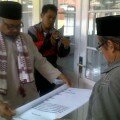
Shiites having a prayer discussion in Bandung, West Java. (JG Photo/Yuli Krisna)

Shiites having a prayer discussion in Bandung, West Java. (JG Photo/Yuli Krisna)

But Hesti is concerned that the formation of the alliance has set a bad precedent for the country. “In the end there will be hatred. Maybe now it is Ijabi, but one day others may be targeted as well. That’s something we don’t want,” he says.

Last November several Shiite groups in Bandung, Surabaya, Makassar, Yogyakarta and Jakarta were harassed as they tried to celebrate Assyura, the Shiite Day of the Martyrs. In Bandung several hard-liners blocked the entrance to a building where the Assyura was scheduled to take place, forcing the local congregation to find another venue.

Hopes for next president

JAI cleric Uyun says he has high hopes for this year’s presidential election, predicted to be won by reform-minded and moderate candidate Joko Widodo.

“I really hope our next president will uphold the Pancasila [national ideology], the Constitution, Bhineka Tunggal Ika [national motto of ‘Unity in Diversity’],” he says. “If we uphold Pancasila, there will be no more closures of mosques and other houses of worship.

“The government should only facilitate, not interfere with people’s beliefs. Deeming someone blasphemous or righteous should be left up to God.”

JAI Ciamis spokesman Dadan says the next president must resolve past cases of rights abuses and religious violence.

“Whoever is elected… human rights violations, specifically against religious freedom, must be resolved clearly. There should be no more people being threatened and intimidated because of their faith. No more houses of worship or mosques closed down,” he says.

_
By Yuli Krisna on 12:25 p.m., Jul 20, 2014
Category Featured, News, Religion
Tags: Ahmadiyah, minority religions

Posted in Nasional, PersekusiComments (0)

Belief in One God

NEW MANDALA — EARLIER this month, municipal government officials once again sealed the entrance to an Ahmadiyah mosque in Bekasi, on the outskirts of Jakarta.

The mosque had previously been closed in February 2013, and had been at the center of the debate about the role of Ahmadiyah worshippers in Indonesia. Read the full story

Posted in NasionalComments (0)

Situation worsening for religious minorities: HRCP

In the section on freedom of religion, the report notes that sectarian violence claimed a total of 687 lives in 2013. Seven Ahmadis were killed in pre-mediated attacks, Christian settlements and churches were targeted and a total of 39 people (including Christians, Hindus and Muslims) were charged with blasphemy in the entire year. Read the full story

Posted in UncategorizedComments (0)

Pikiran Usang di Lingkungan Sunni-Syiah-Ahmadiyah

Pikiran Usang di Lingkungan Sunni-Syiah-Ahmadiyah

SEKIRANYA, kepadanya diajukan masalah mana yang benar: Sunni, Syiah, atau Ahmadiyah, saya mengira Quraish Shihab akan menjawab sama: “Pertanyaan itu sudah usang! Masih banyak persoalan besar yang lebih penting yang harus dibicarakan!” Persoalan besar itu ialah kerjasama Sunni-Syiah-Ahmadiyah bagi kemajuan umat manusia!

Read the full story

Posted in NasionalComments (0)

Page 1 of 212

@WartaAhmadiyah

Tweets by @WartaAhmadiyah

http://www.youtube.com/user/AhmadiyahID

Kanal Youtube


Tautan Lain


alislam


alislam


alislam


alislam

Jadwal Sholat

shared on wplocker.com